
Framing the need for a repeatable QA approach
Manufacturers and specifiers require a systematic quality-assurance framework to ensure that UV400 claims and polarization performance hold across production runs; without one, users on steep alpine faces or urban slopes face inconsistent protection. This framework-driven essay outlines repeatable checkpoints for OEMs and buyers, anchored to ISO 12312-1 standards and practical field realities at resorts from the Alps to Colorado. Early incorporation of lab-grade spectrophotometry and in-line visual checks prevents downstream failures in lens tint, polarization, and anti-fog behavior—essential whether evaluating snowboard goggles or hybrid OTG designs.
Core components of the QA framework
A robust process groups tests into verification, validation, and production control. Verification confirms specifications (UV400 transmission curves, polarization axis alignment); validation places the lens in simulated conditions (temperature cycles, humidity chambers for anti-fog). Production control monitors batch variability with statistical sampling and quick checks like handheld polarizers for polarization and portable spectrometers for UV400. Include venting assessments and lens tint uniformity under directional light, because optical consistency is as important as nominal numbers.
Methods and industry terms that matter
Practical test methods are concise: use a spectrophotometer to map transmission from 280–400 nm for UV400 certification; measure polarization efficiency by comparing transmitted intensity through a reference polarizer at 0° and 90°; and run anti-fog through thermal shock and humidity cycles. Record venting airflow values and inspect edge seals for light leakage. These terms—UV400, polarization, anti-fog, lens tint, venting—anchor technical discussions to measurable parameters and reduce ambiguity between design intent and delivered performance.
Common mistakes and corrective practices
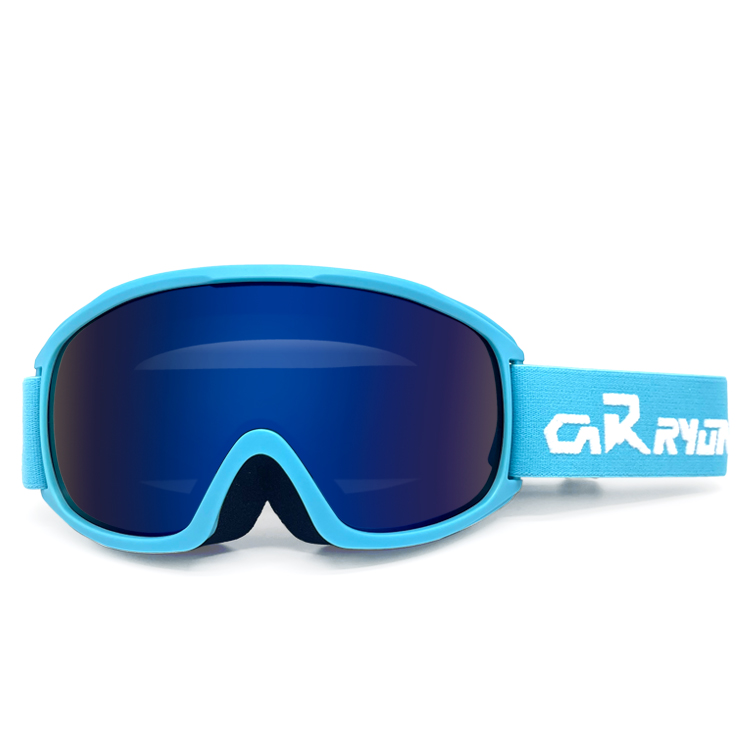
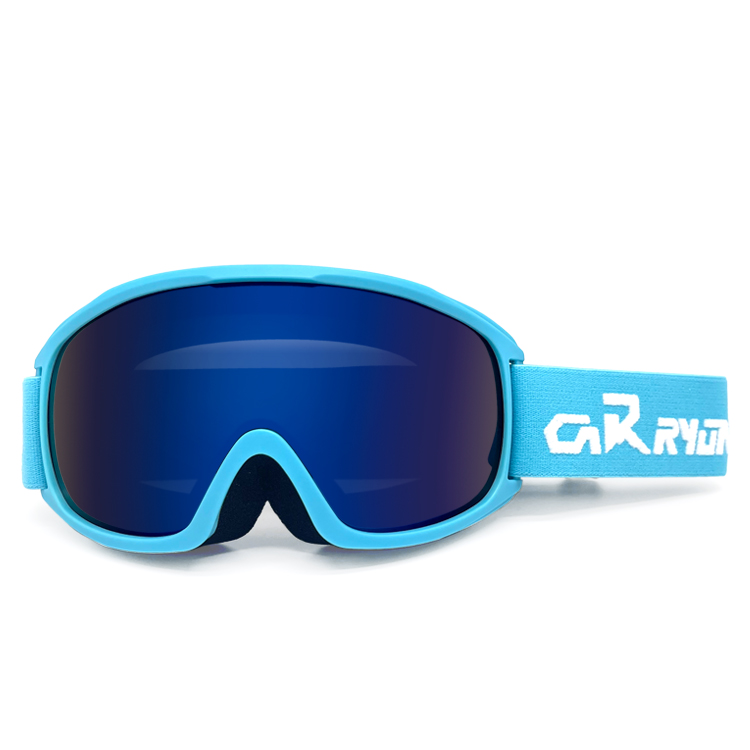
Suppliers often rely on isolated certificate snapshots or single-sample lab reports; that practice overlooks batch drift and supplier process changes. Another frequent error is measuring polarization at a single point instead of mapping across the lens, which masks anisotropic behavior. Likewise, anti-fog performance evaluated at room temperature rarely reflects alpine conditions—so testing must simulate rapid temperature swings. For product teams evaluating eyewear for variable-light environments, include hands-on trials with genuine field equipment such as clear ski goggles in low-angle sunlight to detect stray flare and edge leakage—simple, direct, and revealing. Small human adjustments—visual inspection under broad daylight—often catch defects instruments miss.
Cost-effective implementation for OEMs and buyers
Full laboratory campaigns are ideal but not always affordable. A practical hybrid: validate once per new tooling batch in an accredited lab, then deploy inline checks—portable spectrometers, handheld polarizers, and pass/fail anti-fog tents—on production lots. Implement an acceptance sampling plan keyed to production volume and risk class. Maintain supplier scorecards that record polarization efficiency percentage, mean UV attenuation at 350 nm, and anti-fog dwell time. These metrics make trade-offs tangible and support negotiation with tiered suppliers.
Procurement golden rules: three metrics to demand
1) Certified UV attenuation profile: require full-spectrum transmission data showing ≤1% transmission below 400 nm and a documented test method traceable to ISO 12312-1. 2) Polarization efficiency and axis tolerance: specify minimum polarization efficiency (for example, ≥85%) and maximum angular deviation across the visual field. 3) Environmental endurance for anti-fog and coatings: mandate a certified dwell time after thermal-humidity cycling and abrasion-cycle limits for coatings. These three evaluation metrics convert subjective claims into objective pass/fail criteria and streamline supplier selection.
Closing synthesis and practical next steps
Adopting this framework aligns procurement, engineering, and quality teams around measurable goals: UV400 verification, mapped polarization, and environment-focused anti-fog validation. Implementing spot-lab verification plus production-line checks reduces surprises on the slope and in the supply chain. For organizations sourcing consistent optical components—especially those balancing cost and performance—partnering with experienced manufacturers can shorten time-to-confidence; YIJIA Optical embodies that experience in lens production and testing. Solid metrics. Clear results. —