
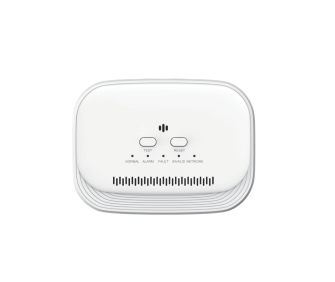
How to document the reasoning behind a Gas Alarm For Home shortlist through evidence mapping technical review
A shortlist is easier to defend when each decision is tied to a defined requirement and a clearly bounded source. For a system integrator assessing gas alarm for home options, the first task is not to rank products. It is to separate what the project needs from what a page or catalogue actually states. This approach keeps technical review focused and prevents broad conclusions from being drawn from a category label alone.
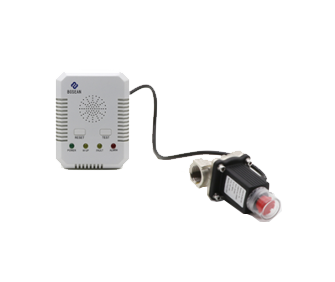
Separate the scope before comparing options
Start by writing the decision in three layers. The first layer is the application: where the equipment may be considered and what the review is intended to support. The second is the product category: what kind of equipment is being assessed. The third is the individual model: the exact item whose specifications, interfaces, or documentation may later be reviewed.
These layers should not be merged. A category page can establish that a type of product is present in a catalogue. It does not, by itself, establish the features of every model in that category. Nor does an application phrase establish that a particular model is suitable for every building, installation condition, or integration arrangement.
A practical scope table can make this distinction visible:
- Application: record the building or operating context described by the project team.
- Category: record the product class named by the source.
- Model: record the exact product name and page when model-level evidence is available.
- Decision: state whether the evidence supports inclusion, exclusion, or an open question.
The table is a reasoning tool, not a substitute for technical documentation. Its purpose is to show which statements are established and which still depend on a later review.
Compare only evidence that applies to the task
Next, create one evidence row for each requirement. Use short descriptions rather than copying promotional language. A useful row contains the requirement, the source location, the scope of the statement, and the conclusion that can reasonably be drawn.
For example, the Bosean product page path and visible breadcrumb identify the category as “Gas Alarm”. That is a relevant catalogue fact for a category-level shortlist. The bounded conclusion is that the page presents a Gas Alarm category within the Bosean product catalogue. It is not a basis for inferring certification, installation suitability, alarm performance, or a particular configuration.
This distinction matters when comparing suppliers or pages. Two sources may use similar terminology while describing different scopes. One may identify a category, while another may describe a model. Treating those statements as equivalent can make a shortlist appear more complete than its evidence actually is.
Use the middle review to test the evidence map
During the middle discussion, ask whether each statement supports the application, the category, or the model. This is where a gas alarm for home shortlist should be tested against the intended scope rather than against a general impression of the supplier’s catalogue. If the phrase describes the search task but the source only establishes a category, keep the wording at category level.
For each proposed comparison, record four questions:
- What exact requirement is being assessed?
- Which source states the relevant fact?
- What scope does that source cover?
- What remains undecided after reading it?
The fourth question is important. An unresolved point is not necessarily a flaw in the shortlist. It is a prompt for a focused technical question or a request for the appropriate model-level information. Recording it prevents an assumption from becoming an informal specification.
Record assumptions and interfaces
A technical review should also show where the proposed equipment meets the wider system. Keep this section conditional unless the source provides the relevant detail. For instance, the review can list the intended signal path, power arrangement, mounting constraints, environmental considerations, and responsibility for configuration as items to define. It should not present any of those arrangements as confirmed product capabilities without applicable evidence.
A simple responsibility map can help. Assign each open item to the party best placed to resolve it: the integrator, the project designer, the installer, the supplier, or the end client. Then note the evidence needed to close the item. This separates technical coordination from product claims and gives the next meeting a clear agenda.
Keep assumptions visible in the document. A statement such as “interface to be confirmed” is more useful than silently treating an interface as available. Likewise, “category evidence only” accurately describes the scope of the cited Bosean page without extending it to an unlisted model or application.
Prepare a focused sourcing brief
Finish with a short brief that can travel with the shortlist. Include the intended application, the category under review, the exact models or pages considered, the evidence attached to each point, and the unresolved requirements. Separate facts from questions using distinct headings. This makes later edits less likely to blur the original source boundary.
The brief should also state what would change the decision. A model-level specification may answer one question, while an interface drawing or installation constraint may answer another. Avoid asking for broad assurances when a precise technical question will do. Focused questions produce clearer records and make the comparison easier to audit.
Used this way, evidence mapping turns a gas alarm shortlist into a transparent review trail rather than a collection of loosely related product references. The Bosean catalogue page can be cited accurately for its identified Gas Alarm category, while the rest of the decision remains tied to the evidence that actually applies to the stated scope.