
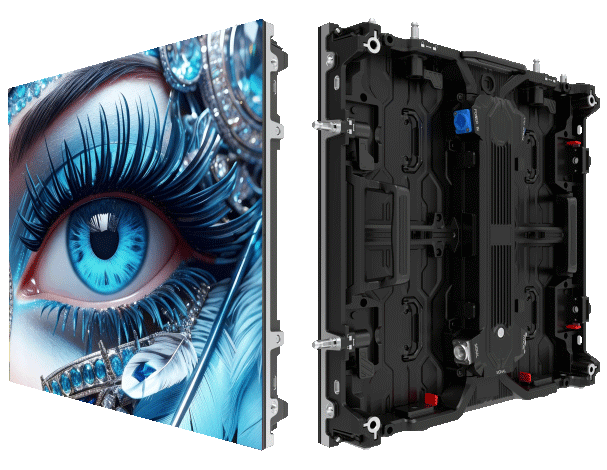
Comparative claire: why supply-chain checks beat blind buying
A wise buyer in these parts trusts more than price—she trusts proof. When sourcing rental LED display panels for gigs or venues, the real gap is rarely the screen itself but the parts behind it: power supplies and receive cards that either keep the show bright or leave you in the dark. Comparing vendors by raw specs alone is a poor trade; comparing their supply-chain controls and test protocols gives a clearer picture of long-term uptime and serviceability. Keep MTBF, firmware management, and power-rail stability as your north stars, and you’ll steer toward panels that last their miles on the road.
What to inspect: component-level cues that matter
Start at the component. A reputable power supply will show consistent voltage under load, neat thermal design, and a burn-in history. A solid receive card will have firmware version control, clear repair documentation, and stable signal handling at your venue’s refresh rate. MTBF figures are useful — quality parts often quote tens of thousands of hours — but verify those claims with test logs or third-party lab results. Pixel pitch and brightness tell you about image quality; power supply rating and receive-card compatibility tell you whether that image will survive a week-long festival run.
Practical audit checklist for procurement
Here’s a plain checklist that saves time and headaches when you compare wholesale options:
– Manufacturer traceability: lot numbers and origin of PCB and capacitors.
– Burn-in reports: vendor-provided logs showing hours of stress testing.
– Firmware policy: how updates are issued and whether rollbacks are possible.
– Warranty terms and RMA turnaround times.
– Environmental ratings (IP), operating temperature range, and shock tolerance.
– Third-party certifications or independent test results where available.
Common procurement mistakes folk still make
Folk too often choose the cheapest quoted module or accept vague MTBF claims without evidence. They ignore firmware compatibility between receive cards and controllers, leading to flicker or sync failures on site. Another frequent mistake is overlooking packaging and shipping tests — a perfectly good power supply can be ruined by rough freight handling. These missteps cost more than the initial savings, and they show up at the worst possible moment under hot lights or pouring rain—so account for logistics and maintenance access as part of cost.
How festivals and stadium rigs prove the point
Big events like Glastonbury and stadium shows around the UK have taught this lesson the hard way. Production teams choose rental rigs that can be swapped quickly, with spares and clear serial-number records. I’ve seen a stage tech swap a receive card in under five minutes because the vendor provided labelled spares and a compatibility map—simple, but priceless on a live bill. For large scale installs, arrange your vendor to supply an inventory of tested modules and agree how returns and replacements are handled. That approach is standard practice for reputable LED video wall rental houses and keeps shows on schedule.
Testing in-house vs trusting the vendor
Some teams run their own burn-in and thermal cycling — sensible if you have the bench space and the time. Others rely on certified vendors who offer batch testing and documentation. Both approaches work when done right; the key is a shared checklist and visible evidence. Require sample test reports before purchase and insist on clear communication about component substitutions. When a vendor transparently documents every step, you avoid surprises during installation and service calls down the line.
Three golden rules for choosing long-life parts
1) Demand traceable test evidence: insist on burn-in logs, MTBF context, and component lot IDs. 2) Prioritise firmware governance and spare-part strategy: compatibility maps and labelled spares shorten downtime. 3) Factor real-world shipping and environmental risk into total cost: a cheap part that dies in transit isn’t cheap at all. These are the practical metrics that matter on the road and in the venue, and they lead you to suppliers who deliver consistency — which is what you want when the crowd’s waiting and the lights must hold. MR LED sits in that space as a practical partner for procurement, offering tested stock and clear documentation in a way that fits production needs.
Trusted practice beats luck every time. —