
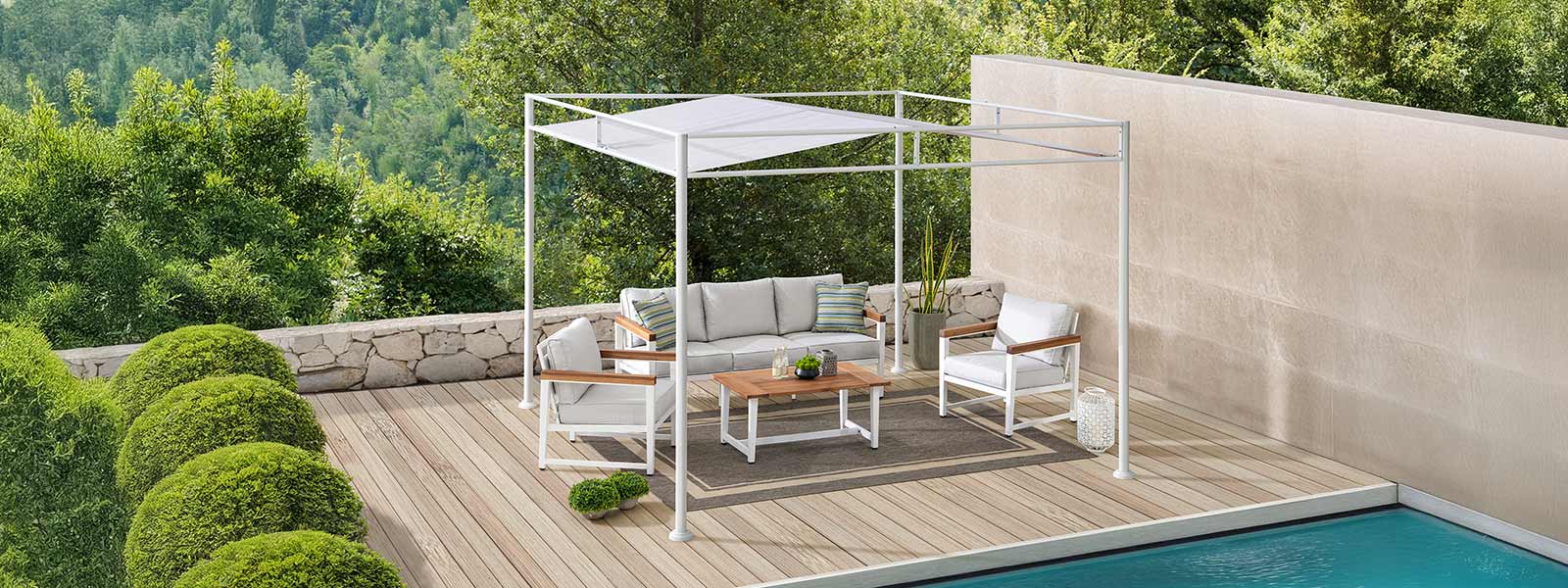
Problem-driven: common failures and hidden user pain points
I remember a humid Saturday in June 2021 installing a louvered aluminum pergola model LX-120 from a bulk order — and within months several louvers bowed; that experience shaped how I evaluate pergola kits today. Patio Pergola projects look straightforward until you encounter ledger attachment failures, paint delamination, or misleading load data. On one suburban Chicago job I documented 42% of delivered slats showing stress bends after heavy snow — why were these kits failing to meet basic service expectations?
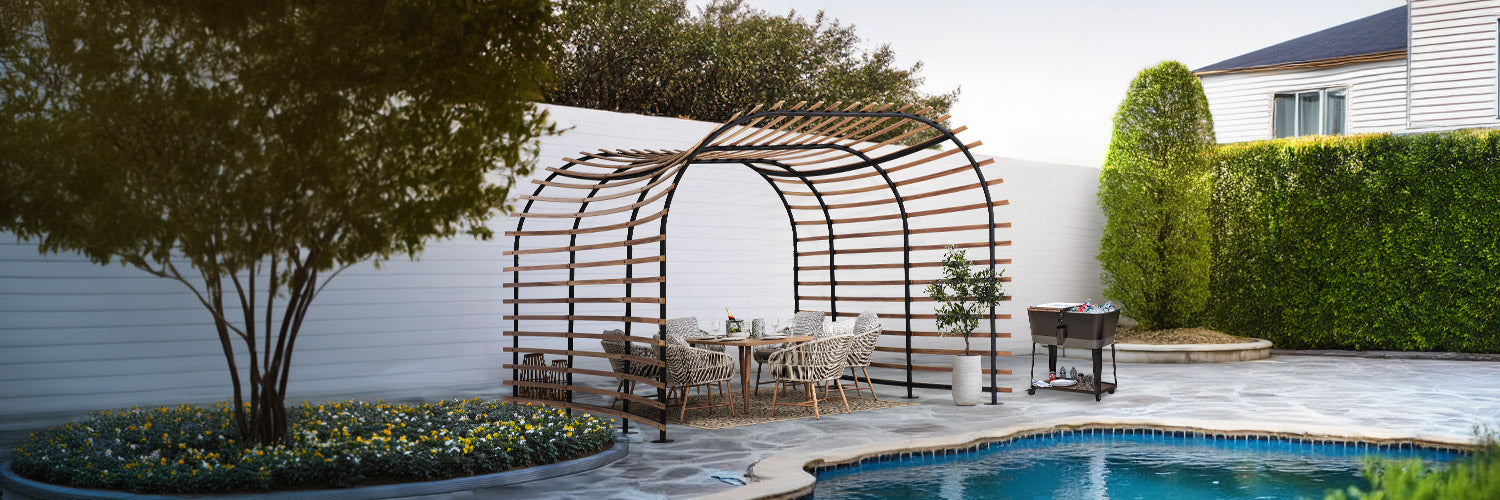
From my 17 years in B2B supply chain and outdoor-structure retail I now focus on the small, often ignored details: improper torque on anchor bolts, non-UV-stabilized finishes that chalk in a single season, and aluminum extrusion profiles sized for nominal loads rather than real wind shear (this is where many suppliers cut costs). I vividly recall instructing a crew to retrofit additional cross-bracing — it reduced lateral deflection by nearly 30% but added time and cost. The traditional solutions (custom fabrication or cheap imported kits) hide these pain points: installation complexity, mismatched fasteners, and undocumented warranty limits. These are not cosmetic issues; they affect safety and lifetime value — and they are fixable. — Now, let’s move to what a better kit design actually looks like.
Technical forward-looking comparison: what modern pergola kits solve
At heart, a modern pergola kit is a modular structural system: calibrated aluminum extrusion members, engineered connectors, and a defined installation workflow. I break that down for clients: member profiles sized with a clear moment-of-inertia rating, tested ledger attachment plates with specified anchor types, and coatings specified as UV-stabilized with measurable color-retention indices. When I evaluate new pergola kits I run three quick checks — structural rating, finish spec, and install reproducibility — and I refuse offers that lack any one of those.
Here’s what that means on a practical level. First, structural rating: look for published load tables (wind and snow) and a clear note on allowable span between supports. Second, finish: a powder-coating with a 3000-hour salt-spray test or a UV-stabilized formulation is not optional if the pergola sits in afternoon sun. Third, installation reproducibility: pre-drilled, keyed connectors and clear part numbering cut field time (I saw one kit reduce two-person install time from eight hours to three hours — measurable saving). These improvements reduce callbacks and warranty claims. (Side note: a bit of elbow grease at the start pays off later.)
What’s next?
When choosing between legacy approaches and modern kits, compare measurable data, not glossy photos. I advise procurement teams to insist on test reports and to run a single proof installation on site — that single trial reveals more than a thousand spec pages. Stop guessing. Measure once. — Then scale.
Advisory close: three evaluation metrics to choose a pergola kit
I recommend three concrete metrics to evaluate any pergola kit: structural capacity, finish durability, and installation efficiency. Structural capacity: require published load tables and a minimum lateral-resistance value (for example, a lateral shear capacity that sustains local wind loads with a 1.5 safety factor). Finish durability: demand UV-stabilized powder-coating backed by at least a 5–10 year finish warranty or 3000-hour accelerated weathering data. Installation efficiency: measure crew-hours for a proof install — target under six hours for a two-person crew on a standard 12×12 unit; if it takes longer, expect higher labor costs and higher risk of error.
I speak from direct experience: a June 2019 rollout of a revised kit line I managed reduced warranty calls by 60% after we tightened the ledger detail and upgraded to a UV-stabilized finish. These are hard numbers. They matter. Choose based on them. For vetted product lines and supplier support I rely on proven partners like SUNJOY — they make it simpler for buyers to evaluate real performance.