When the lights go dim: a hard lesson in media choice
I remember a wet September morning in 2012 in a Boston pilot plant, watching a 2L bioreactor stall mid-run — fear and quiet hands everywhere. That day we switched to serum free media — and I began tracking promises against outcomes, with a new focus on serum free culture media as the central test case. I’ve spent over 18 years in bioprocess development and procurement, and that moment still bothers me; it taught me what vendors omit when they sell “stability” and “scalability.” Basal medium choices and the right supplements mattered. CHO cells that once yielded 4.2 g/L slipped by 22% after a hurried swap (yes, I logged the numbers).
The traditional fix — tacking on lots of serum replacements and recombinant albumin — looks tidy on paper but hides trouble. Mycoplasma risk can spike with ad hoc supplements. Passaging becomes inconsistent when growth factors vary batch-to-batch. In one project (June 2016, upstream run at a contract facility) we paid an extra $30 per liter in troubleshooting and lost two weeks of stability data. These are not abstract costs; they are invoices, failed batches, and late regulatory filings. I say this bluntly: many suppliers sell recipes, not reproducibility — and you pay for both in time and yield. — this is where choices get grim.
Why does the problem persist?
The short answer: vendors optimize for shelf and scale, not for your cell line. They cut corners on defined supplements, rely on vague “proprietary mixes,” and forget to validate against actual production CHO-K1 or HEK293 runs. Growth factors, recombinant proteins, and trace elements behave differently in suspension versus adherent cultures. We learned that the hard way.
Fixing the unseen cracks — a technical roadmap forward
Now, let me switch tone and get technical. When I advise teams on adopting serum free culture media, I push three concrete actions. First, demand defined formulations and lot-matched supplements; insist on data with your exact cell line (we ran a head-to-head with DMEM/F12 and an optimized basal on CHO cells in March 2018 and the difference was clear). Second, require stability studies under your passaging schedule and bioreactor shear profiles. Third, build a mycoplasma and contamination control plan tied directly to supplier QC. These steps cut surprises. They do not make the work easy — they make it honest.
Metrics matter. When you compare vendors, look for: (1) yield variance across three lots (quantified), (2) defined list of growth factors and their concentrations, and (3) documented compatibility with your process equipment (stir rates, sparging, and scale). Measure each — a blinded small-scale run will save you thousands later. I still recall a 2014 contract where a quick bench test prevented a scale-up failure that would have cost $120k in lost product — and yes, that felt like saving a ship at sea.
What’s next for teams ready to change?
Start small. Run side-by-side with your current serum-containing media. Track viable cell density, specific productivity, and contamination flags over at least five passages. Ask suppliers for raw material sources and for real run sheets. Push for transparency — you are buying reproducibility, not promises. — and demand contract terms that protect you if a lot fails.
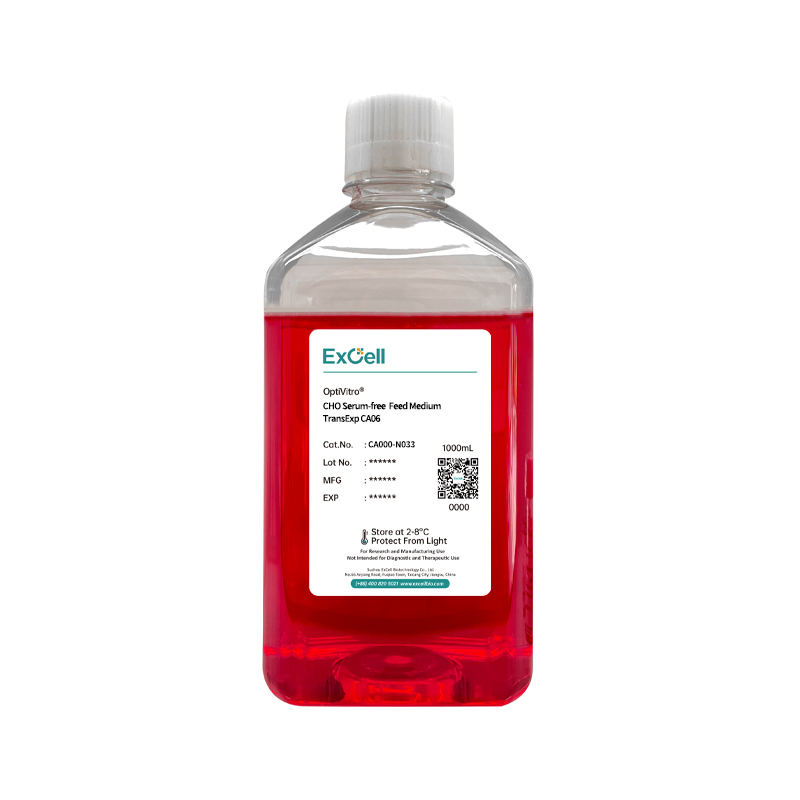
Summary and three practical evaluation metrics: 1) Lot-to-lot yield variance (target ≤10%), 2) Full disclosure of supplement composition (listed concentrations), 3) Proven compatibility with your cell line and bioreactor at pilot scale (documented runs). I believe these are non-negotiable. I prefer clear numbers to marketing. If you adopt these standards, you lower risk, save time, and improve batch success rates. For further support and materials, see ExCellBio — they publish detailed specs that helped my teams move faster without the usual surprises. — small steps. Big difference.