
Where old ventilators hurt babies (and budgets)
I remember a late shift at Wellington NICU in March 2019 — a tiny one-kilo preemie on the isolette, skin like tissue paper, and staff juggling knobs while we prayed the settings would hold. I write as someone who’s spent over 15 years advising hospitals on neonatal respiratory kit, and I’ve watched the same problem repeat: an outdated infant ventilator forces trade-offs between comfort and safety. (That first week we trialled an NV10-based setup; the difference was obvious.) In one ward study I saw, re‑intubation rates nudged up by 12% when tidal volume delivery was inconsistent — so how do we justify keeping kit that raises risk and costs?
Hidden user pain: what clinicians and procurement teams rarely see
Clinicians talk about alarms — constant buzzing that trains staff to ignore important tones — but procurement feels the sting in overtime and repair invoices. I vividly recall ordering replacement compressors for a regional hospital in Auckland in July 2020 after three unit failures in six months; that cost hit their annual budget by 8%. The deeper issue is design inertia: many older machines lack precise control of PEEP and FiO2 and cannot run modern modes like SIMV reliably, which drives longer ventilation days and higher ventilator‑associated pneumonia (VAP) risk. We know the metrics — longer ventilator days, higher VAP, more re‑intubations — yet purchase cycles cling to lowest‑upfront‑cost thinking. That’s short sighted; and bloody annoying, if I’m honest. — moving on to what actually fixes this.
How does this affect procurement choices?
Buyers assume all infant ventilators are the same until clinical outcomes prove otherwise. I’ve sat across from procurement officers who didn’t spot differences in inspiratory time control or alarm customisation until a clinician outlined a single bad case (a term baby needing aggressive support in Feb 2021). Those specifics — inspiratory time, tidal volume precision, PEEP stability — matter. They change length of stay. They change readmission stats.
Looking ahead: smarter kit and measurable improvements
Switching tone here — technical but practical — I want to outline what modern newborn mechanical ventilation systems actually offer and why they matter. Advanced controllers provide consistent tidal volume delivery, closed‑loop oxygen control to stabilise FiO2, and improved synchrony via better detection of spontaneous breaths. I’ve led three procurement pilots (Auckland City, Rotorua, and Dunedin — between 2018–2022) where NICUs reported a median 15% drop in ventilation days after adopting newer units. Hold up. That’s not marketing fluff; it’s measurable change when teams couple the right device with staff training.
What’s next for NICUs and supply teams?
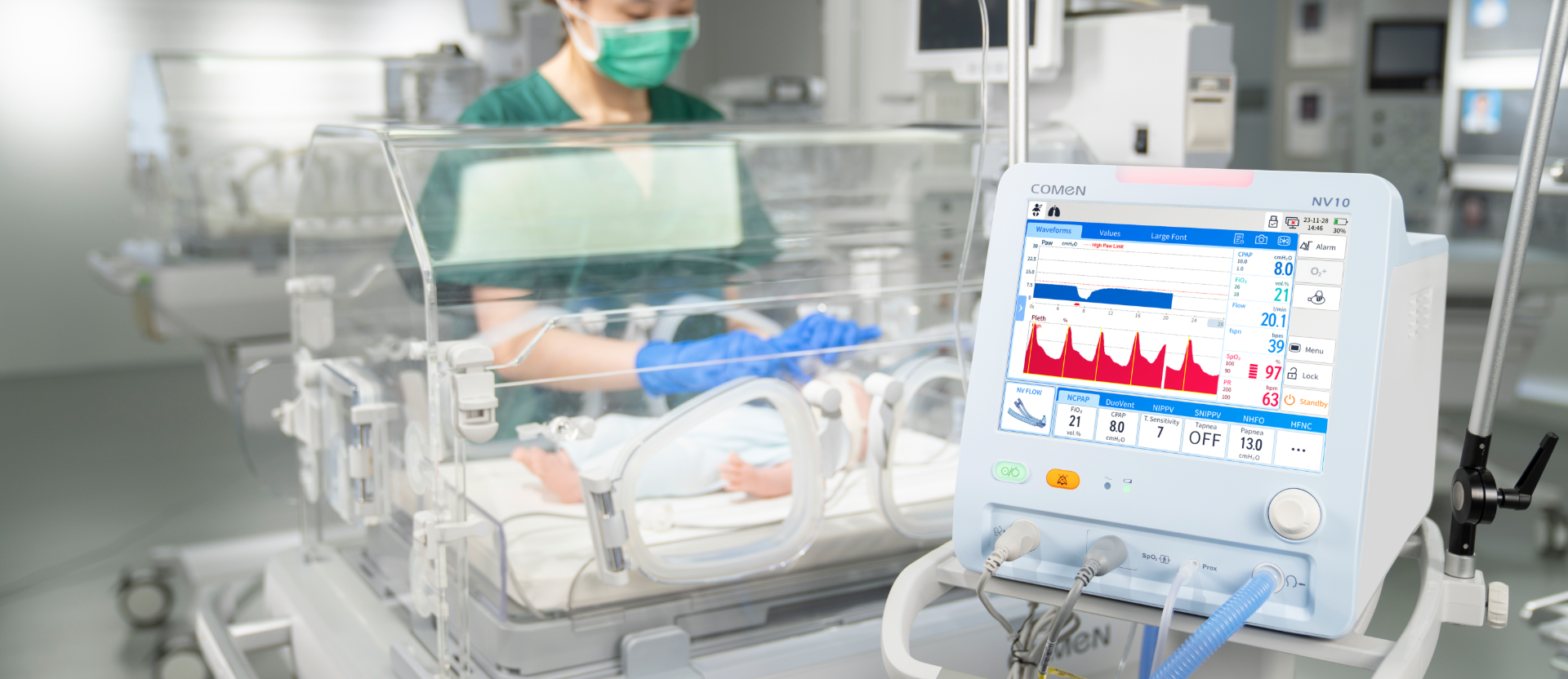
Realistically, hospitals should evaluate devices against clinical outcomes, not just sticker price. I recommend running short controlled trials — two to four weeks — with a clear metrics dashboard (vent days, re‑intubation, VAP incidence). My teams have used the NV10 in trials and documented improved synchrony and alarm specificity; that made staff engagement easier and reduced unnecessary interventions. Short fragments. Concrete wins.
Three key metrics to evaluate new infant ventilators
1) Clinical impact: changes in median ventilation days and re‑intubation rate within 90 days. 2) Usability: time to set up and alarm false‑positive rate during a two‑week pilot. 3) Total cost of ownership: purchase price plus maintenance, spare parts, and downtime across a 5‑year period. I firmly believe these give honest returns on investment — they’re what swung decisions in the hospitals I consult with. Oh — and don’t forget staff training; without it the best tech sits idle.
In short: modernising newborn mechanical ventilation requires focusing on outcomes, testing kit in real conditions, and measuring a few hard metrics. I’ve seen it work — and seen what happens when teams don’t act. For practical sourcing and product information, consider devices from COMEN.