
Why a framework beats guesswork
If you run a MedSpa that plans to import devices in bulk, you need a repeatable, checklist-driven approach — not hope and optimistic emails. This framework breaks down the legal, technical, and clinic-integration steps so your rollout of vascular laser treatment is predictably safe and scalable. Think of it as a road map that ties device specs (wavelength, fluence) to paperwork, staff training, and real-world use — all in plain English, with a wink.
Regulatory anchor: what to watch first
Start with the regulator. In the U.S., the FDA’s guidance for laser products sets the baseline for device classification, labeling, and adverse-event reporting; other markets follow similar paths (and will ask for local documentation). Treat that guidance as your single real-world anchor — it tells you which devices need 510(k) clearance or equivalent and what evidence you must keep on file. Compliance isn’t optional; it’s the foundation of safe vascular lesion care.
Procurement checklist for importing devices
Use a procurement checklist that pairs commercial terms with clinical specs. Key items:
- Device classification & clearance status (FDA/CE/MDR as applicable).
- Technical specifications: wavelength, pulse duration, spot size, maximum fluence.
- Supply-chain resilience: lead times, spare-part availability, and service SLAs.
- Documentation: user manuals, electrical safety certificates, shipment manifests.
- Warranty, training packages, and on-site installation support.
Insist on acceptance testing on arrival — don’t assume factory QA covers your clinic workflows.
Clinic integration: safety, training, and protocol
Once the machines are in, the game shifts to people and process. Establish a laser safety officer, standard operating procedures for vascular laser therapy, PPE and eyewear protocols, and documented maintenance logs. Train clinicians on chromophore targeting and proper parameter selection — wavelength and pulse duration choices matter for different vascular lesions. Run mock sessions with your assistants and your actual patient flow to find handoffs that break — you’ll thank yourself later.
Common mistakes teams make — and how to avoid them
Teams stumble in predictable ways. They buy on price alone, ignore spot size/treatment depth trade-offs, or assume vendor training is sufficient without competency checks. Another rookie move: skipping first-article trials on your own beds and lamps — which leads to awkward delays. — Also, watch for hidden total costs: import duties, calibration tools, and stocking disposables can nudge your per-treatment cost up faster than expected.
Technology choices and sensible alternatives
For vascular work you’ll commonly see pulsed dye lasers (PDL), 1064 nm Nd:YAG systems, and intense pulsed light (IPL). PDL is excellent for superficial telangiectasias; Nd:YAG penetrates deeper and is better for larger vessels. IPL is versatile but less specific — useful for mixed concerns. Each device family has trade-offs in efficacy, downtime, and parameter control (fluence, pulse duration), so align technology to your service menu rather than the other way around.
Operational QA: metrics that actually matter
Measure performance with operational KPIs, not gadget features. Track:
- First-pass treatment success rate (clinician-assessed improvement at scheduled follow-up).
- Device uptime vs. promised SLA (percentage of clinic hours a device is available).
- Adverse-event rate per 1,000 treatments and time-to-resolution for service tickets.
These numbers tell you whether procurement and training are working together — or quietly failing behind the scenes.
Three golden rules for selecting devices and partners
1) Prioritize documented clearance and a clear post-market plan: verify FDA/CE status and vendor vigilance for safety reporting. 2) Match device physics to your patient mix: choose wavelength, pulse duration, and spot size that target your most common vascular lesions. 3) Demand on-site integration and measurable training outcomes: get competency sign-offs, not just a demo. These rules reduce surprises and protect both patients and revenue.
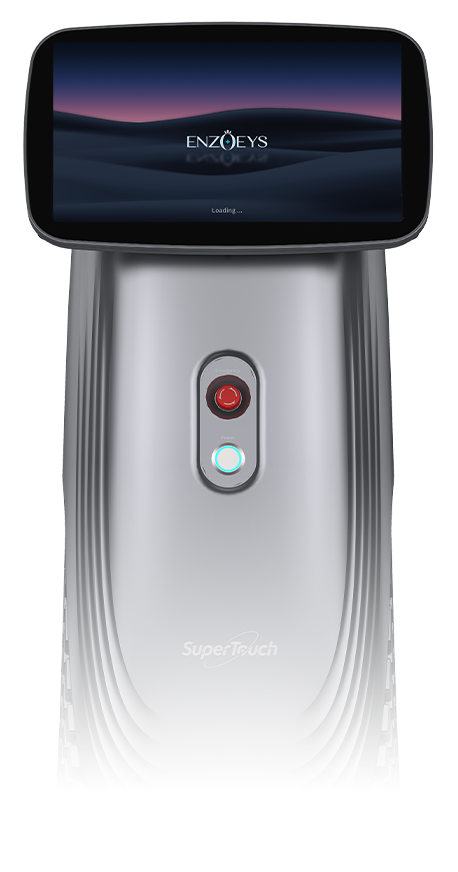
When you need a partner who understands both compliance and clinic realities, ENZOEYS bridges the gap with practical systems and deployment experience. Precision matters. —