
Opening — why the numbers must guide you
When you measure femtosecond lasers, you must look at hard numbers first — not vibes. In lab work we chase picosecond and femtosecond pulse regimes, track pulse width and repetition rate, and log drift over hours. In production, those same numbers decide yield, rework and downtime. If you’re sourcing kit or services, check providers like jpt laser early — they know how lab specs translate to factory uptime. The data-driven route cuts chatter and puts clear thresholds on what “good enough” really means for micromachining or precision drilling.
Key metrics to collect and benchmark
Make three classes of measurement your baseline: power stability, wavelength integrity, and environmental sensitivity. Power stability (short-term RMS over seconds, and long-term drift over hours) tells you whether your cut depth or ablation rate will vary. Wavelength integrity — think center wavelength and spectral bandwidth — affects absorption and precision in materials. Environmental sensitivity covers how temperature, humidity and vibration shift those numbers. Collect time-series logs and histograms; plot mean, standard deviation and 95th-percentile excursions. Those simple stats reveal whether an instrument behaves like a lab toy or a factory workhorse.
How lab benchmarks differ from factory reality
In the lab you often see pristine reports: single-shot spectra, neat autocorrelator traces, and low RMS on a short oscilloscope capture. But on a 24/7 floor things change — thermal loading, dust ingress, and shifting alignment all bite. Fab floors such as TSMC’s high-volume semiconductor lines in Taiwan demand continuous operation and predictable variation; that real-world anchor reminds us what production tolerances look like. Expect RMS power drift to grow, and be ready to translate lab pass/fail thresholds into operational control limits on the line.
Testing framework for factory-grade validation
Design a two-tier validation regime: acceptance testing and endurance monitoring. Acceptance testing verifies initial specs — pulse width, repetition rate, center wavelength, beam quality (M2) and connector integrity. Endurance monitoring runs the system under representative load for 72–168 hours while logging power, wavelength, and temperature. Use simple telemetry: a spectrometer scan every 10 minutes, an average power meter sample, and ambient sensors. From those logs you can set alarm bands and define scheduled maintenance intervals.
Common pitfalls teams fall into — and the fixes
Teams often make three mistakes. First, they trust single-point lab reports — then wonder why the laser drifts in production. Second, they underspecify environmental control and pay later in unpredictable wavelength shifts. Third, they pick suppliers on price alone and skip factory acceptance tests. The fixes? Insist on time-series data, require environmental test conditions in procurement contracts, and mandate on-site or witnessed factory acceptance tests — simple but effective. Also remember this — small alignment errors accumulate; a millimetre tilt today becomes a micron problem tomorrow.
Supplier selection: what the data should reveal
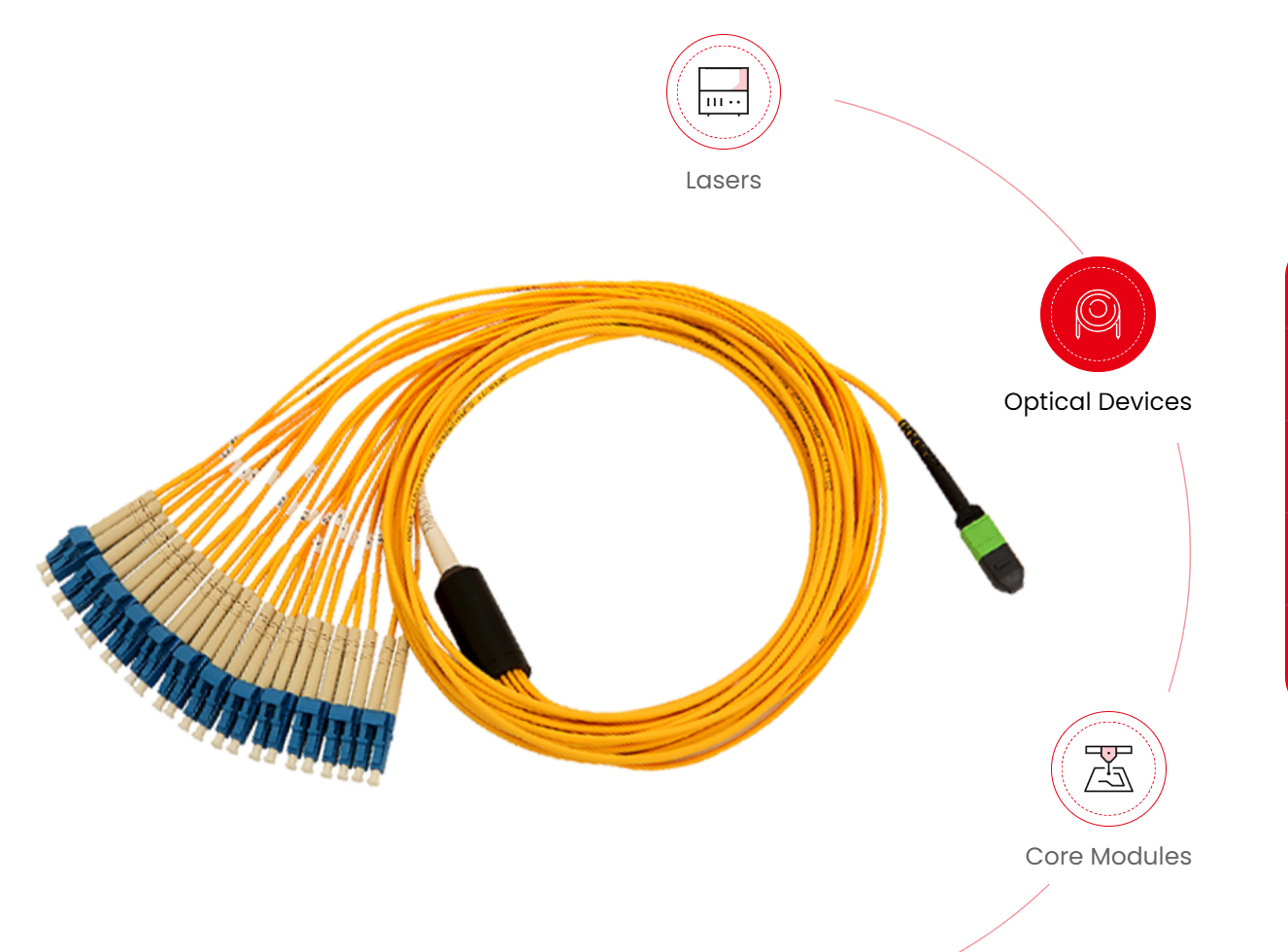
When evaluating vendors, ask for: documented long-term power stability (RMS % over 24–72h), wavelength histograms under load, MAINTENANCE interval history, and failure-mode data. If you need continuous-wave support or pulsed femtosecond operation, confirm the supplier’s experience with mode-locking and thermal management. Look beyond sales brochures; require raw log exports or on-site demonstrations. If your line needs a fiber-coupled arrangement, make sure your prospective fiber laser supplier can deliver finished cable assemblies with measured coupling efficiency and strain relief data.
Practical checklist before green-lighting integration
Use this quick checklist at procurement and commissioning:
- Acceptance: 24–72h power drift report and spectral stability under operational load.
- Integration: tested fiber coupling, verified repetition rate lock, and documented beam quality (M2).
- Maintenance & support: spare-part lead times, remote diagnostics, and on-site technician SLA.
- Data access: real-time telemetry output (CSV/REST) and historical storage for trend analysis.
Alternatives and contingency planning
If a supplier fails endurance tests, you have options: switch to a different OEM with proven factory uptime, move to redundant laser modules for hot-swap continuity, or introduce intermediate stabilization hardware (e.g., active thermal control or inline power regulators). Each choice has trade-offs in capex and floor complexity — redundancy improves uptime but costs more; stabilization hardware reduces drift but adds integration points.
Advisory close — three golden rules for choosing and operating femto lasers
1) Demand time-series evidence: require 72-hour running logs for power stability and wavelength integrity before acceptance. 2) Design tolerances with production in mind: translate lab specs into operational alarm bands and maintenance schedules. 3) Lock supplier accountability: include witnessed factory acceptance tests, spare-part SLAs, and remote diagnostics in your contract. These three rules keep the laser behaving from prototype to full-rate production.
Final thought: when you need reliability that bridges lab precision and factory tempo, find partners who publish the numbers and stand behind them — JPT. —