
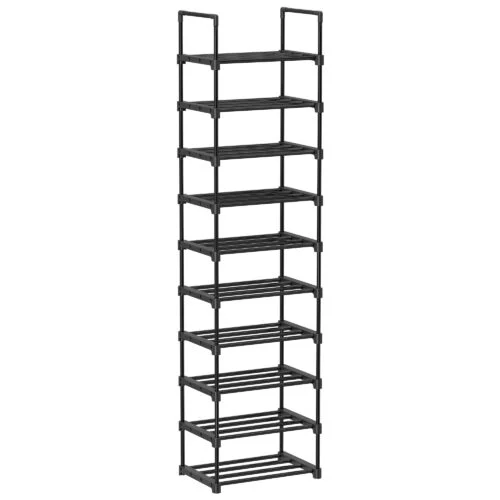
Introduction: Defining Fit-to-Space, Not Just Fit-to-Price
Let’s start clear: a good rack isn’t only cheap, it must fit the space and the load. You ring a shoe rack manufacturer, and the clock starts ticking—lead time, specs, carton size. In many channels, up to 28% of storage returns link to wobble, misaligned holes, or crushed packaging (small numbers, big pain). So we ask: are you buying a product, or a process that can scale, kan? In sourcing, this is the core concept—fit-to-space rate, the share of units that meet real users’ spaces without hacks or extra tools. It ties to carton design, CNC drilling accuracy, and even powder coating cure time. If those drift, your margin bleeds.
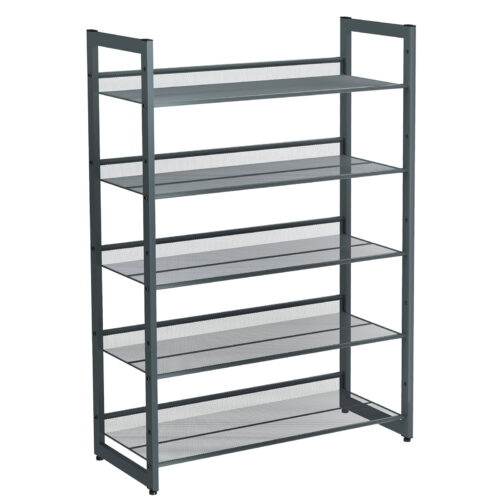
Direct talk, ya: older fixes chase price first, then quality, then speed—always in that order. But demand spikes and SKU mixes don’t wait. Packaging density fights with assembly ease, and your returns become a silent tax. We lay out the gaps, compare old methods with new, and see where data can help. Next, we go into the hidden weak links that many teams overlook—then test what better looks like.
Hidden Weak Links in the Sourcing Chain (and What They Cost)
Earlier we mapped the basics; now we go deeper with the wholesaler view. When you pick a china shoes rack wholesaler, the usual checklist—MOQ, price, delivery—sounds okay. But look closer at three fragile points: torque spec consistency on fasteners, powder coating thickness variance, and carton burst strength. Look, it’s simpler than you think: most wobble comes from a 0.2–0.5 mm tolerance drift at tube joints plus under-torqued screws. That small drift multiplies during assembly—funny how that works, right? Add a tight carton to save freight and now you get panel rub, paint scuff, and higher defect rates. The symptom shows as “cheap feel,” but the cause is process control, not just cost.
Why do old fixes still fail?
Because they patch the wrong layer. Teams swap suppliers, yet the issue is upstream: no load-bearing test by batch, missing SPC on hole spacing, and weak QA gates at the powder line exit. Traditional solutions push for thicker steel (cost up) or more foam in cartons (freight up). Better is to fix the jig: align CNC bending and drilling with a shared datum, then lock torque windows during pilot runs. Add simple gauges at final pack to catch out-of-square frames. And confirm flat-pack design with user assembly time studies—if a build takes more than 12 minutes for a first-time user, expect a spike in returns. Wait, hold on—your profit isn’t vanishing in the warehouse; it’s leaking from small, repeated misses at the station level.
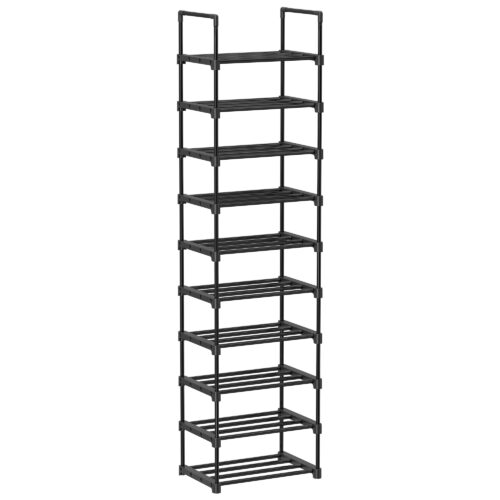
Forward-Looking: How New Lines Beat Legacy Trade-offs
What’s Next
Now let’s compare paths. Legacy lines rely on manual checks and end-of-line inspection. Newer lines embed control at the source: vision-guided drilling, MES-tracked batches, and torque drivers with digital logs. A strong china shoes rack manufacturer can run CAD-to-jig updates fast, then mirror changes to CNC bending and welding cells. With a small digital twin, you simulate carton compression and shelf deflection before cutting steel. That means fewer pilot loops, tighter SPC charts, and steadier assembly time in the field. It’s not fancy for the sake of fancy; it’s fewer surprises when containers land.
Real improvement shows up in simple numbers: fewer missing hardware calls, steadier coating thickness, and smoother fit at joints. Compared to patch-and-pray, the new approach scales because data sits inside the station—torque, thickness, hole location—then flows to ERP without extra paperwork. Advisory close, so you can act now: first, check process capability (Cp/Cpk) on key dimensions like hole spacing and tube ovality; second, review assembly time variance across pilot builds, not just average; third, audit packaging integrity with burst and drop tests that match your route, not a generic standard. Do this, and your racks feel solid out of the box, the returns calm down, and your review scores climb without gaming the system. For deeper sourcing clarity with steady factory practice, you can look to partners like SONGMICS HOME B2B.