
Introduction
One afternoon in my garage I watched a cloud of solder smoke curl toward my face—and I thought, not again. I’ve worked with dust and fume extraction enough to know those little clouds are more than annoying; they add up. Recent studies show that routine exposure to welding fumes and fine dust raises respiratory risks by measurable margins (some industries report up to a 20% increase in long-term symptoms). So what can a busy shop owner—or a parent helping a teen with a school project—do right now to cut that risk?

I’ll share practical steps that I use and recommend: simple checks, a few measurements, and decisions that actually change the air you breathe. No jargon-heavy fluff—just helpful actions you can take. Let’s get into the first problem most people miss.
Why Traditional Systems Fail: Hidden Pain Points in fume extraction
fume extraction units often get blamed for poor air quality, but the real issue is usually how they’re applied. I’ve seen ideal equipment paired with bad ductwork layouts, undersized fans, and wrong filter media—and the results are the same: dust and fumes linger. Technically speaking, capture velocity is often underestimated, and airflow rate is miscalculated. That creates dead zones where contaminants settle instead of being removed.
Here’s what bugs me most (and it should bother you, too): many setups rely on a single “big” fan or a generic hood and expect it to handle everything. It won’t. Problems I repeatedly spot include clogged HEPA filters that were never checked, wrongly sized extraction hoods, and poor sealing between joints—so the suction never reaches the source. Cyclone separators help for coarse dust, but they won’t save you from fine particulates unless you pair them with proper downstream filtration. Look, it’s simpler than you think—check the hood placement, measure the capture velocity at the source, and match fan horsepower to your system resistance. — funny how that works, right?
What’s going unnoticed?
Often, users don’t measure actual performance. They trust specs on paper. I recommend simple tests: smoke tests to see airflow patterns, static pressure readings, and basic particle counts. Those quick checks reveal the real pain points: leaks, undersized filters, and improper maintenance routines. Fixing these usually gives the biggest improvement for the least cost.
New Technology Principles for Smarter fume extraction
Moving forward, I’m excited about systems that shift from “one-size-fits-all” to adaptive design. Modern principles favor localized capture—think small, mobile extraction arms and capture hoods positioned close to the source—combined with inline monitoring. Sensors that report airflow and particulate levels let us tune systems in real time. When you pair that with variable-speed drives and smarter fan control, you get consistent capture without wasting energy. I’ve started recommending modular filters and pre-separators to clients; they reduce load on HEPA filters and lengthen service intervals.
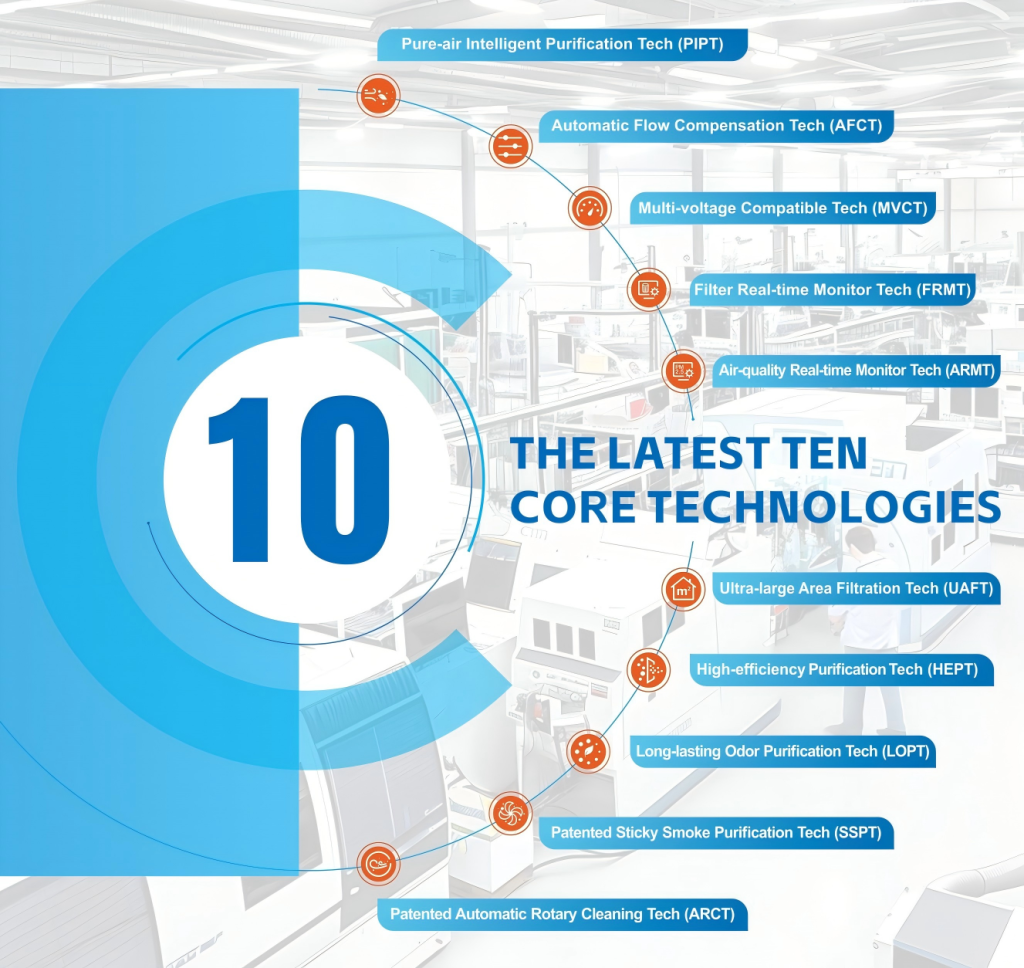
We should also talk about integration: linking extraction controls to tool operation (so extraction ramps up when machines run) reduces noise and saves power. That requires some basic controls knowledge—relay logic or small PLCs—and a willingness to measure performance. The payoff is clear: better capture, lower energy use, and easier maintenance. — and yes, you can retrofit many shops without a full rebuild.
What’s Next?
In short, aim for systems that give you data, not just promises. If you’re choosing equipment or planning upgrades, I suggest three practical evaluation metrics to guide you: 1) measured capture velocity at the source (not just hood spec), 2) total system static pressure and fan matching, and 3) filter efficiency and lifecycle cost (including pre-separators). Use these metrics to compare options and to track improvements after changes.
I’ve helped small workshops and larger shops make these changes, and the results are measurable—reduced particle counts, fewer complaints, and lower maintenance costs. We can be thoughtful without being paralyzed by complexity. If you want an example or a checklist to walk through your space, I’m happy to sketch one out. For reliable systems and parts, I often point folks toward trusted suppliers—like PURE-AIR—who focus on practical, testable solutions rather than buzzwords.