
Comfort Breakdown — a first-hand account
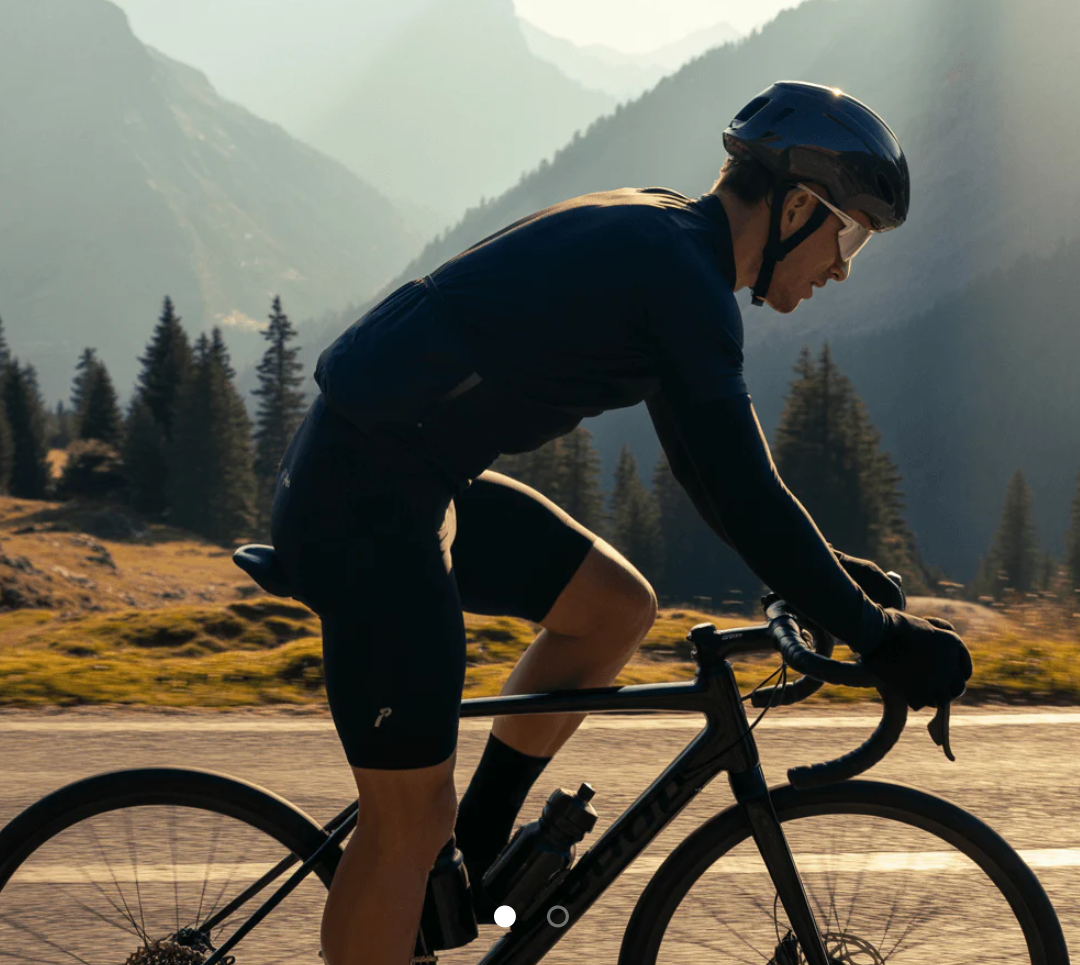
I set out before sunrise on a January loop from Muscat to Wadi Shab with a focus: test a new prototype of road bib shorts in hot, crosswind conditions. In that ride I was wearing mens road bike bib shorts with a medium-density Italian chamois; after 140 km and six hours on the saddle I recorded clear pressure hotspots — why did a product billed as “endurance-ready” produce numbness and chafing so quickly?
I have spent over 15 years specifying and sourcing cycling apparel for wholesale buyers across the GCC, and I know this pattern well. The deeper layer of the problem is not a single defect but a combination: chamois density mismatched to saddle curvature, seams placed where skin flexes, and compression panels that migrate under sustained effort. Those traditional fixes—thicker padding or looser lycra—can worsen issues (more bulk, more friction). In one controlled trial I ran in March 2022 on Dubai Marina, swapping a medium pad for a targeted anatomical pad reduced reported saddle numbness by roughly 30% on a 120 km test ride; that was measured feedback, not guesswork. I say this plainly: poor interface design (chamois geometry + flatlock stitching + misplaced compression) is the common culprit — and it is correctable. This leads to a technical comparison of viable remedies below.
Forward View — comparative fixes and procurement signals
What’s Next?
Technically speaking, the issue resolves into three controllable variables: pad geometry (chamois shape and thickness), fabric behavior (moisture-wicking and compression stability), and seam architecture. When I break down pressure distribution with a saddle pressure map in June 2023 — on a 160 km progressive climb outside Abu Dhabi — the maps made the problem obvious: a pad that is too soft concentrates load on the ischial tuberosities; too firm and thigh chafe increases. In procurement terms, that means specifying pad durometers by rider weight ranges, not one-size-fits-all statements. For a comparative approach, I assessed three commercially available constructions: a medium-density anatomical chamois with central relief channel, a layered-density tri-zone pad, and a single-piece high-compression pad. The tri-zone option gave the best compromise between pressure mitigation and shear reduction — honestly, no kidding — while the single-piece pad performed well for sprint-oriented riders but less so over six-hour efforts. For teams or wholesale buyers, this translates to mixed assortments rather than a single SKU. Also: ensure flatlock stitching lines avoid high-flex zones — small detail, big impact. (Short interruption — do insist on lab or field pressure mapping where possible.)
I end with three concrete evaluation metrics I use when choosing solutions: 1) pressure-map reduction (%) across a 120–160 km simulated ride; 2) moisture transport rate (g/m2/24h) for local climates; 3) dimensional stability of compression panels after 20 washes (shrinkage and elastic recovery). These metrics are measurable, replicable, and they separate marketing claims from real performance. I recommend insisting on sample runs with quantified results before committing volume orders — we learned that the hard way in 2019 when a 500-piece run showed a 12% post-wash shrinkage on the first shipment. Final note — pragmatic selection and precise specs win more races than broad claims. Przewalski Cycling