
User-first taste: what the operator actually needs
The operator wants clarity—crisp characters, immediate touch response, no squinting under a mid-day glare. Imagine the feel of a kitchen counter: shiny, cool, unforgiving of crumbs. That’s your control surface. Choosing an industrial panel pc means balancing touch sensitivity, daylight brightness, and the fine positional feedback robotics demand. You need micron-level repeatability on one hand and over 1,000 NIT luminance on the other, and both must live in a chassis that survives splash, dust, and EMI without fuss.
How micro-tolerances and high-NIT goals trade blows
Micro-tolerances are like a chef’s knife edge—one wrong angle and the cut is ruined. In a robotic line, displays feed commands that map to sub-millimeter motion. High-NIT displays, designed for outdoor readability, introduce heat, power draw, and sometimes visual latency. The result is a careful choreography: pick a display topology and drive electronics that keep touch jitter below the robot’s tolerance window while preserving contrast in bright ambient light. LCD technology choices, touch controller tuning, and fanless design tradeoffs all influence that choreography.
Design choices that matter (and the mistakes teams repeat)
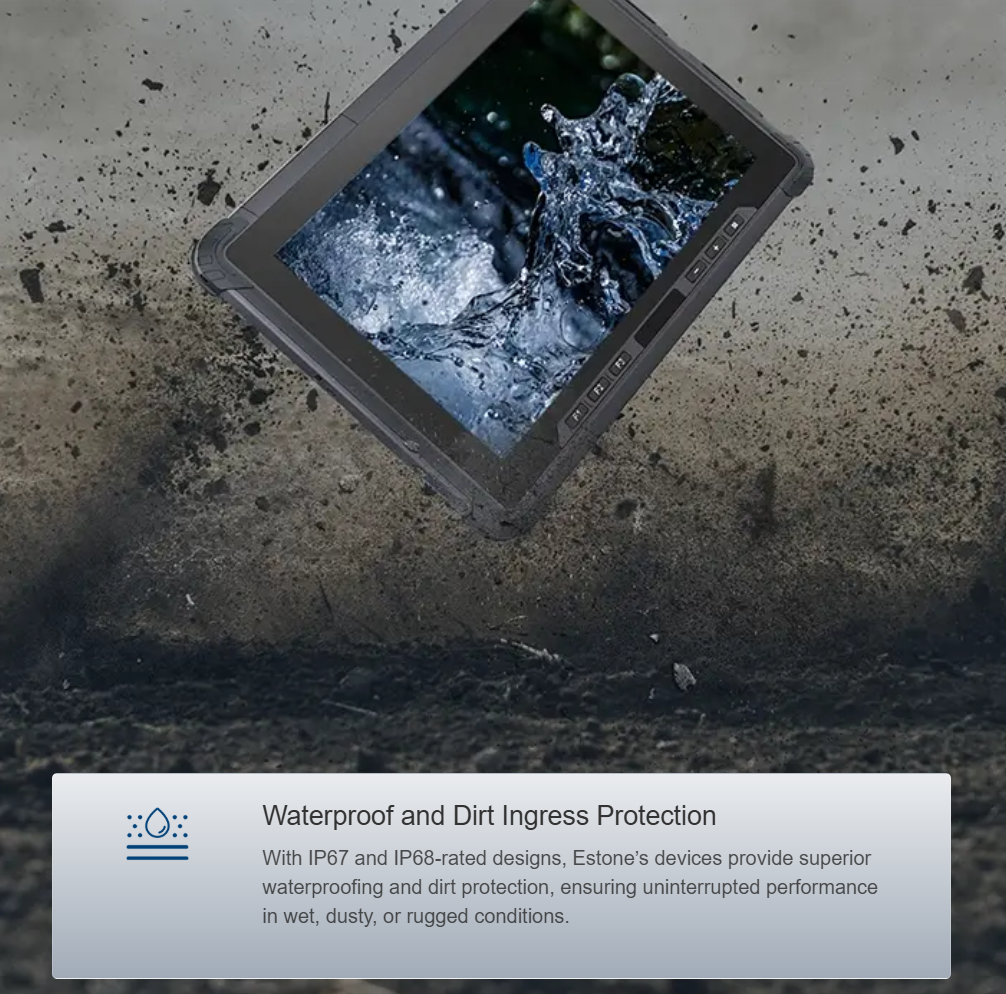
Start with these concrete levers: panel brightness (NIT), optical bonding to reduce reflection, touch type (projected capacitive vs. resistive), ingress rating (IP65 or higher), and EMI shielding. Teams often over-spec brightness as a blunt instrument—cranking NIT without optical bonding still leaves reflections; that’s wasted power and heat. Another common mistake is relying on off-the-shelf touch firmware without tuning the touch controller for the specific glove types and vibration profile of the line—results are inconsistent inputs and frustrated operators. Ruggedization and VESA mount choices matter too; a wobbling panel becomes an accuracy problem, not just a nuisance.
Field lessons from trade floors and production lines
At shows like SPS in Nuremberg and on several outdoor trials, engineers measured real differences between 700 NIT panels with excellent anti-reflective layering and 1,200 NIT panels with poor bonding—surprising outcomes that favored better optics over sheer brightness. Industrial integrators and industrial panel pc suppliers often recommend IP65 housings and fanless designs for dusty environments; that guidance stems from repeated failures where fans clogged and introduced particulate into controls. Real testing in the sun, not just in the lab, reveals touch latency issues and thermal throttling that bench specs can hide.
Practical alternatives and selection patterns
When space allows, choose an optically bonded, high-contrast LCD with a tuned projected capacitive touch controller for outdoor, high-precision robotics. If you operate in oily or glove-heavy conditions, a hardened resistive layer or a PCAP tuned for gloves can be better. Consider EMI shielding if motors and drives sit close; otherwise occasional signal jitter will creep into position commands. If power budgets are tight, target efficient backlights and smarter brightness scaling rather than brute-force NIT increases.
Three golden rules for choosing the right display setup
1) Match touch accuracy to robot tolerance: demand certified touch jitter metrics that are at least an order of magnitude finer than your smallest motion step. This ensures the operator input isn’t the weakest link.
2) Prioritize optical bonding and anti-reflective coatings over raw brightness past the point of diminishing returns—measure real-world contrast under direct sunlight (1,000 NIT is a common daylight benchmark to test against).
3) Validate environmental durability: require IP ratings, fanless thermal designs, and EMI shielding specs tied to your plant layout—field-proven components beat theoretical specs every time.
Closing and practical value
Choose components that behave predictably on the line, and design touch logic that respects the robot’s smallest moves; those are the decisions that save commissioning hours and late-night rework. Estone’s product line folds these choices into tested modules that answer both the micron-precision and the sunlit-readability demands, delivering the calm, dependable surface operators need. Estone.