
Introduction — a comparison-led framing
Distribution centers weighing automation need clear, side-by-side logic: where do autonomous mobile robots (AMRs) outperform conveyors, forklifts, or dense storage like a Pallet Shuttle? Use the comparative lens proven since Amazon’s acquisition of Kiva Systems in 2012 — an industry inflection point — as a real-world anchor. This piece maps five concrete advantage domains, pairing each with operational tradeoffs and practical architecture considerations so you can prioritize throughput, footprint, inventory accuracy, and cost predictably. Expect terms like pallet shuttle, throughput, racking, and AS/RS to appear as we translate strategy into execution.
1. Throughput and task parallelism: AMRs vs fixed-path systems
AMRs excel at dynamic tasking: independent robots route around congestion while conveyors and fixed AS/RS lanes create chokepoints. Measured throughput gains typically come from higher parallelism — more simultaneous pick-and-carry cycles per shift. Where conveyors deliver predictable linear flow, AMRs increase effective throughput by reallocating idle time across vehicles and pick stations. Design implication: focus on fleet sizing and dispatch logic to convert fleet mobility into consistent throughput improvements rather than intermittent peaks.
2. Footprint efficiency and scalable density
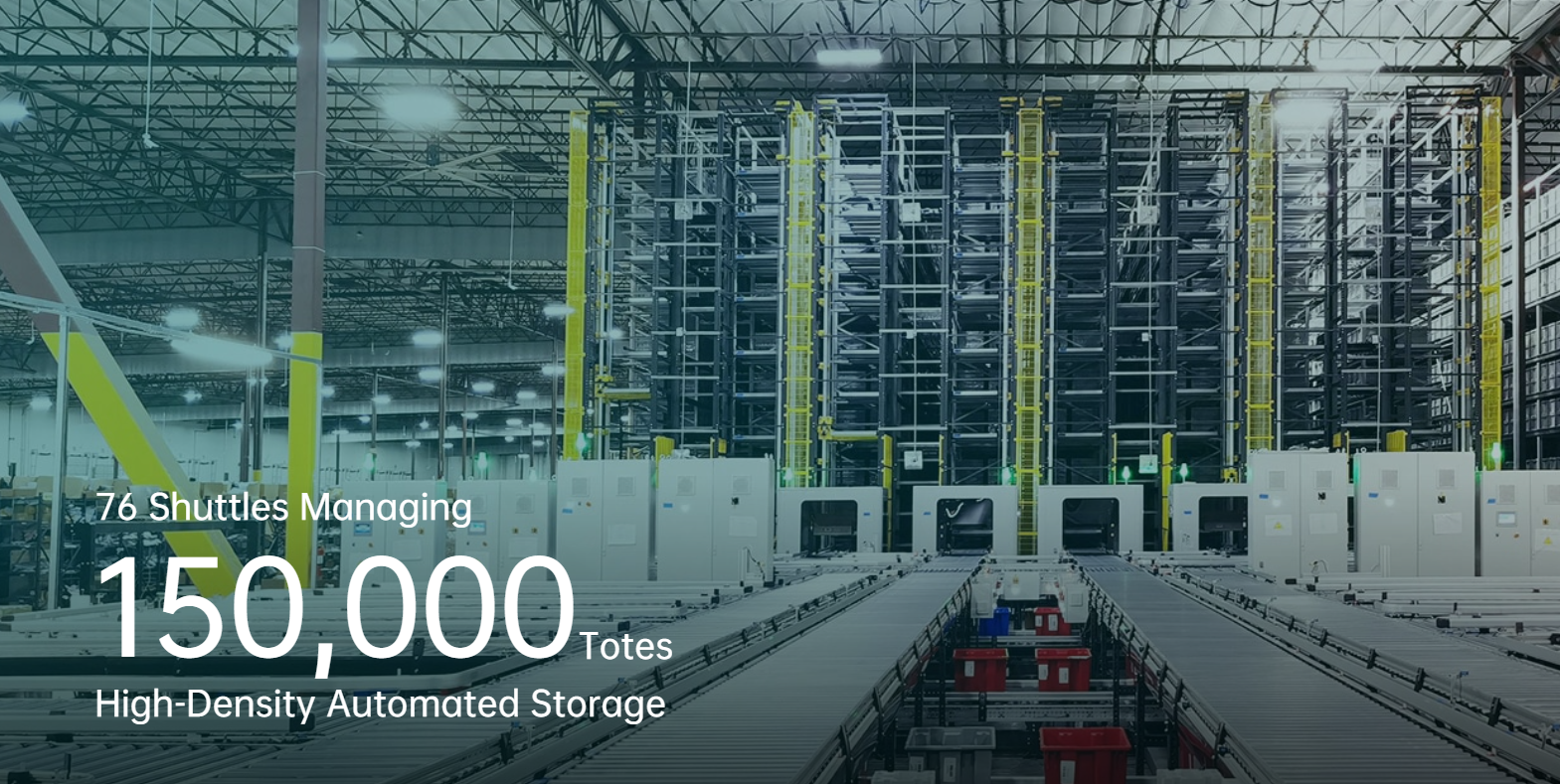
Dense storage systems such as pallet shuttles reduce aisle space needs; a four-way design packs pallets tightly. AMRs reduce the need for wide aisles but do require staging and charging zones. For dense pallet flow you might pair AMRs with a four way pallet shuttle to combine mobile flexibility with racking density. The comparative decision comes down to cubic utilization: choose racking plus shuttle when space per pallet is the bottleneck; choose AMRs when SKU velocity and pick variability drive floor layout.
3. Inventory accuracy and SKU velocity
AMR ecosystems integrate sensors and edge computing to maintain live location data for mobile inventory, improving cycle counting and SKU traceability. Fixed AS/RS offers high accuracy by constraining movement, but it struggles with mixed-SKU, high-velocity zones where frequent re-slotting is required. Implement barcode or RFID validation at pick points and tune your Warehouse Management System to reconcile AMR positional data with stock records — that reduces exceptions at outbound docks and raises order fill rates.
4. Labor distribution and operational cost
AMRs let staff focus on value tasks — quality checks, exception handling, and packing — while robots handle repetitive transport. This shifts your labor profile and can lower forklift hours and related safety exposures. But capital and ongoing maintenance must be weighed against labor savings. Capture real staffing baselines, forklift usage hours, and average handling time per SKU before committing, and model a three-year payback scenario rather than a single-year target.
5. Integration, downtime, and modular upgrades
Integration risk is the silent cost. AMRs can be introduced incrementally and scaled with software updates; conveyors and AS/RS are monolithic investments with longer lead times. Plan for interoperability layers: robot orchestration, WMS hooks, and physical interfaces like docking stations. Keep maintenance windows short and automated alerts visible to operations teams to minimize mean time to repair — a small cultural change with large uptime ROI. — A quick note: start with pilot zones that reflect peak complexity rather than average days.
Operational production teardown
When you perform an operational production teardown, document travel distances, pick density, charge cycle intervals, and average pallet moves per shift. Include {main_keyword} and {variation_keyword} in your teardown checklist so architecture teams map requirements to vendor capabilities. This makes vendor selection evidence-based rather than aspirational, and it surfaces integration points for sensors, racking, and dock workflows early.
Closing advisory: three golden rules for tool selection
1) Measure current-state metrics rigorously: average throughput, forklift hours, and SKU velocity. Use those baselines to model fleet size and racking changes. 2) Prioritize modularity: opt for solutions that allow phased expansion and standard APIs to protect future scalability. 3) Stress-test for exceptions: simulate peak-day mixes and pick anomalies before wide rollout to catch edge cases that drive operational disruption.
Adopt a selection framework anchored in measurable outcomes and you’ll avoid expensive rework. BlueSword. —