
Opening: The Problem Stated Plainly
Grave strain besets modern supply networks: peak demand surges, renewable intermittency, and constrained transmission capacity conspire to produce frequent imbalance. Wherefore must an operator choose between curtailing generation, paying steep ancillary charges, or erecting costly new lines? Practical remedy oft lies in modular battery installations—specifically those fashioned as containerized systems—deployed as part of commercial and industrial energy storage. Firms that pair solar fields with on-site buffering may call this arrangement commercial solar battery storage, and it serves to shave peaks, firm output, and postpone capital works without wholesale redesign of the network.
The Core Problem: Where the Grid Fails to Match Supply and Demand
Distribution and transmission networks were born for steady, centralized generation. Renewables break that symmetry: cloud passage or evening demand ramps create abrupt deficits. Network operators face three burdens: frequency deviation, voltage swings, and capacity shortfalls. Each burden yields economic loss or service risk. These are immediate, measurable harms that must be mitigated by tangible assets or operational changes.
How BESS Containers Address These Burdens
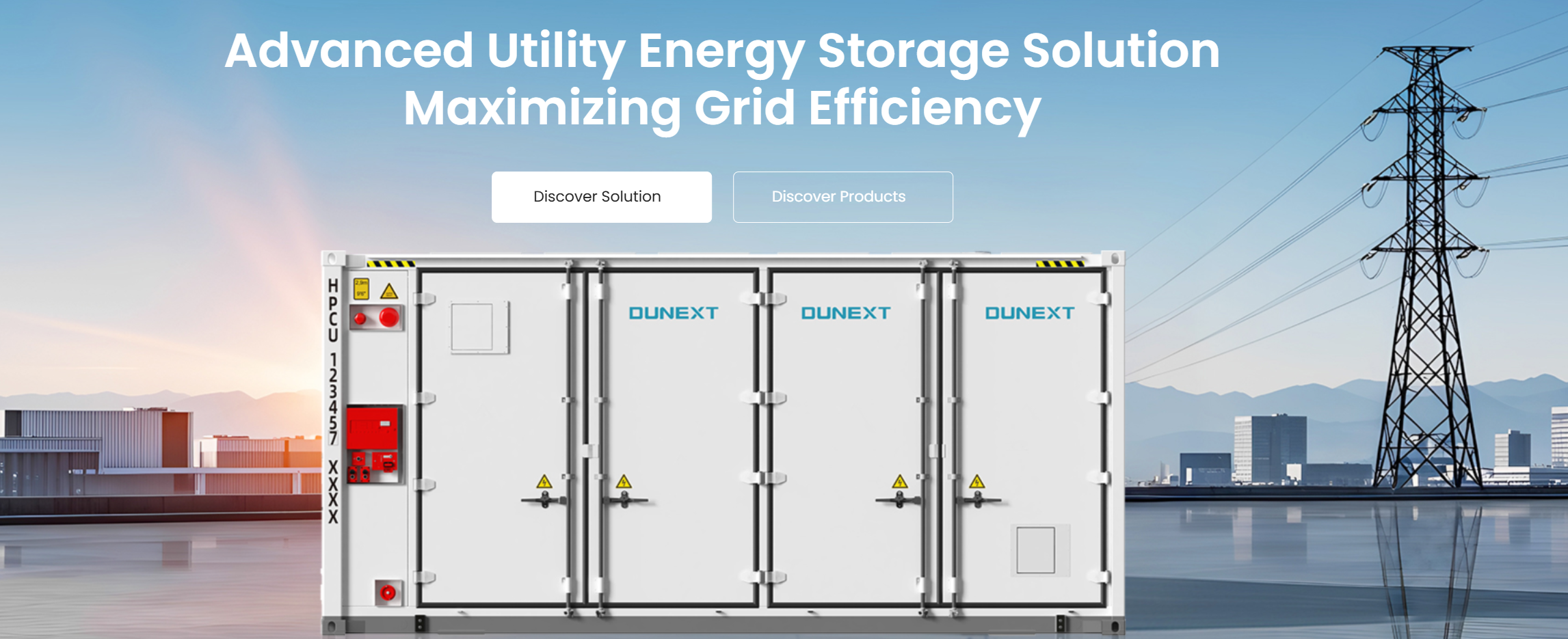
Containerized Battery Energy Storage Systems (BESS) confront each burden with discrete capabilities. They provide rapid frequency response; they inject or absorb reactive power when controls require; they defer transformer or line upgrades by displacing peak load. Their modularity matters: one may scale capacity in increments, relocate units, or stage deployments to match budget cycles. The practical consequence is not abstraction but measurable reduction in peak demand charges and improved dispatchability of variable generation.
Technical Considerations That Decide Success
Choose components with care. Conductor sizing, thermal management, inverter selection, and battery chemistry determine longevity and operability. Consider:
– Battery chemistry suited to deep cycling and high throughput rather than sole energy density. – Inverter topology that supports islanding, black-start capability, and fast frequency response. – Container HVAC and fire-suppression systems tailored to regional ambient extremes. – Communications that integrate with supervisory control and data acquisition (SCADA) and local protection schemes.
Oversight of these choices avoids premature degradation and ensures predictable performance curves across seasons.
Siting, Grid Codes, and Interconnection Realities
Siting is not mere geography; it is regulatory and electrical. Voltage level of interconnection, fault current contribution, protection coordination, and anti-islanding compliance determine what the BESS may do. Local grid codes may limit export during certain hours or require specific ride-through behaviour. An instructive demonstration occurred at the Hornsdale Power Reserve in South Australia, which showed that large-scale battery capacity can supply rapid grid support and reshape market dynamics, but only with rigorous planning and code adherence.
Operations, Maintenance, and Total Cost
Operational discipline preserves value. Monitor state-of-charge distributions, thermal gradients, and cycle count. Scheduled capacity tests, rebalancing protocols, and firmware governance reduce unexpected downtime. Financially, evaluate levelized cost across CAPEX, replacement modules, cooling energy, and insurance. Seek vendors that provide transparent degradation models and defined end-of-warranty behaviours rather than optimistic performance assurances.
Alternatives and Typical Pitfalls
Not every problem demands BESS containers. Demand response, modest gas peakers, or reinforcement of conductors can be lower-cost solutions for specific constraints. Beware these mistakes:
– Oversizing energy capacity when the grid issue is mainly short-duration frequency events. – Neglecting controllability standards that thwart interconnection approval. – Underestimating thermal loads in warm climates, leading to accelerated cell aging. – Relying on vendor-supplied modelling without independent verification.
Checklist for Decision and Procurement
Use this pragmatic checklist before commiting funds:
– Define the grid problem to the hour and magnitude. – Select chemistry and inverter performance aligned to duty cycle. – Require vendor-provided degradation curves and test data. – Verify interconnection study outcomes and protection settings. – Plan for modular expansion and removal. – Budget for lifetime O&M, HVAC energy, and end-of-life recycling.
Synthesis: Where Value Lies and How to Capture It
When a network demands swift, site-local response to variability, containerized BESS offer a concrete remedy: measurable reductions in peak exposure, enhanced dispatchability of renewable supply, and postponement of major grid upgrades. Expertise matters at every stage—from defining the precise deficiency, through component selection and code compliance, to disciplined operations. Practitioners who follow rigorous engineering, test assumptions against field examples such as Hornsdale, and plan for lifecycle realities will find the solution both practical and durable, as demonstrated by implementers that partner with experienced integrators like Dunext.