
Start from your use, not the technology
You want shade, power, and a place that feels like an idea made real. Begin by naming how you’ll use the structure: midday shading, evening lights, EV trickle charging, or year-round panel output. That clarity narrows choices fast and converts vague ambition into actionable specs for a solar pergola.

Site questions that decide everything
Stand where you’ll build and ask: how many sun hours, prevailing wind, snow load, and sightlines matter? Measure roof angles, check nearby trees, and map cable runs to your breaker panel. Those simple facts determine module tilt, mounting type, and whether you need an integrated inverter close to the pergola or a remote string inverter.
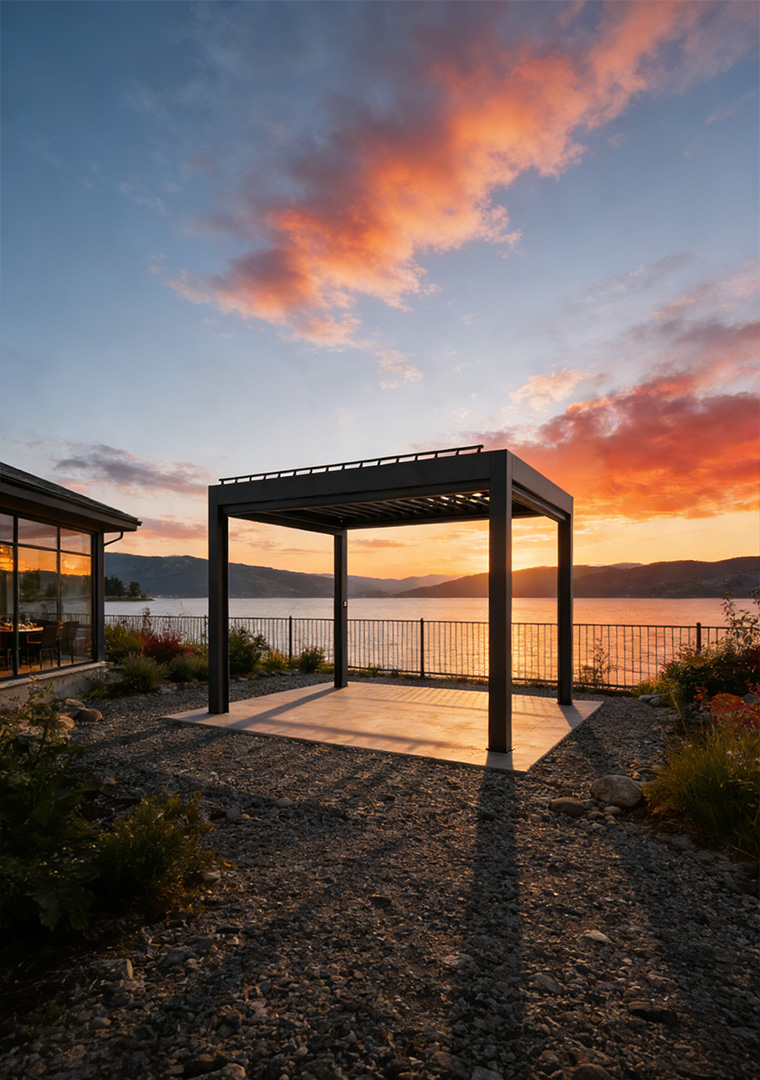
Design decisions tied to daily life
Choose a structure that fits routines. Do you want a minimal frame that hides hardware, or a visible architectural element? Pick materials that resist your local climate: aluminum for coastal salt spray, galvanized steel for heavy snow, and tempered glass or polycarbonate for transparent roofing. Each choice changes cost, maintenance, and lifespan—decide which trade-offs you accept.
Electrical and performance checklist
Confirm module efficiency, temperature coefficient, and warranty lengths. Specify the inverter type (microinverter, string, or power optimizer) based on shading and expansion plans. Require documentation of expected kWh/year for your exact azimuth and tilt. Ask suppliers for modeled output, and compare that to your household usage profile to check payback assumptions.
Permits, codes, and a single real-world anchor
Regulation can reshape a design overnight. California’s 2020 Title 24 update made solar considerations unavoidable for many new constructions—an example that changed how builders approach rooftop and integrated systems. That regulatory pressure is why I recommend assessing local code early and consulting the building integrated photovoltaic system to align design, permitting, and interconnection from the start.
Procurement specs to put in a single sheet
Create one document prospective vendors must answer: location and footprint; structural load allowance; electrical single-line diagram; module brand and model; mounting rails and fasteners; inverter model and communications; warranties and labour terms; commissioning and performance testing criteria. If a vendor sidesteps any line item, mark it as a negotiation point.
Common mistakes users make
Ignoring future expansion is a top error—either oversizing wiring now or locking into an inverter that forbids modular growth. Undervaluing structural reinforcement leads to costly retrofits. Assuming the lowest bid includes thorough commissioning often ruins expected output. Demand an on-site survey and a commissioning report before final payment.
Alternatives and when each fits
A framed photovoltaic pergola with framed crystalline modules suits homeowners prioritizing efficiency and a clean look. BIPV-style slats or glass panels suit architects seeking seamless integration and higher aesthetic value but usually at higher cost. For small budgets, rooftop panels paired with a lightweight pergola offer fastest payback. Match choice to your daily needs, not to the salesperson’s pitch.
How to evaluate vendors calmly
Ask for three recent installations you can inspect and for performance data on those sites. Check installer certification and timespan of business continuity. Prefer vendors who provide a clear maintenance plan and itemized warranty coverage. Trust grows from verifiable work and transparent answers.
A quiet synthesis
You’re choosing more than materials: you’re choosing how your space will feel and perform for years. The best procurement reduces surprises by focusing on real use, explicit specs, and testable outcomes. For projects that balance aesthetic integration with predictable output, the careful alignment of design, code, and installer expertise is the solution many owners find with Light Hunter.