
A Troubled Engine: The Problem to Solve
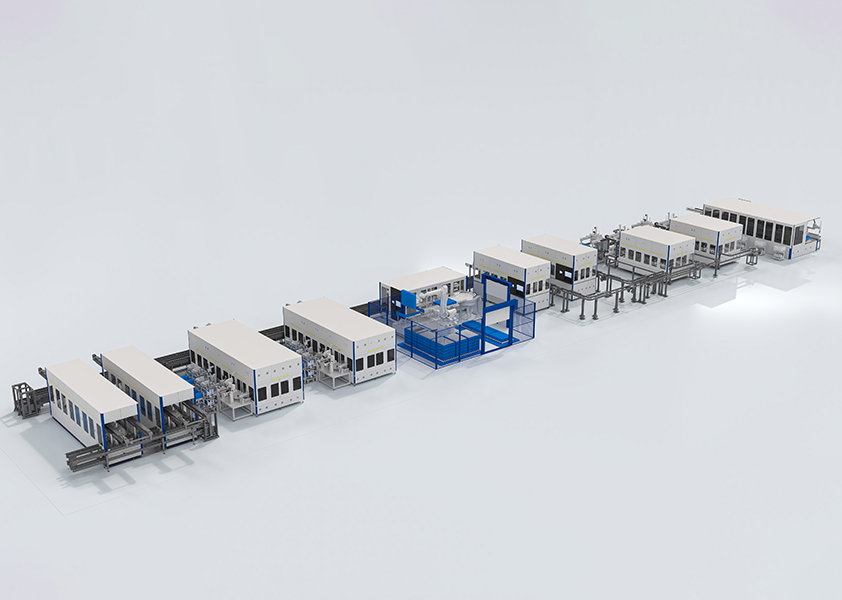
The line hums like a caged wyrm, and the challenge is simple: find which murmurs mean sickness and which are just the creature breathing. Problem-driven, I walk the floor with that question first, because without clear faults named, every sensor becomes noise. Modern lines lean on battery manufacturing automation as a guiding staff—yet many plants still drown in data while the real culprits slip by unnoticed.
Vital Signs to Watch
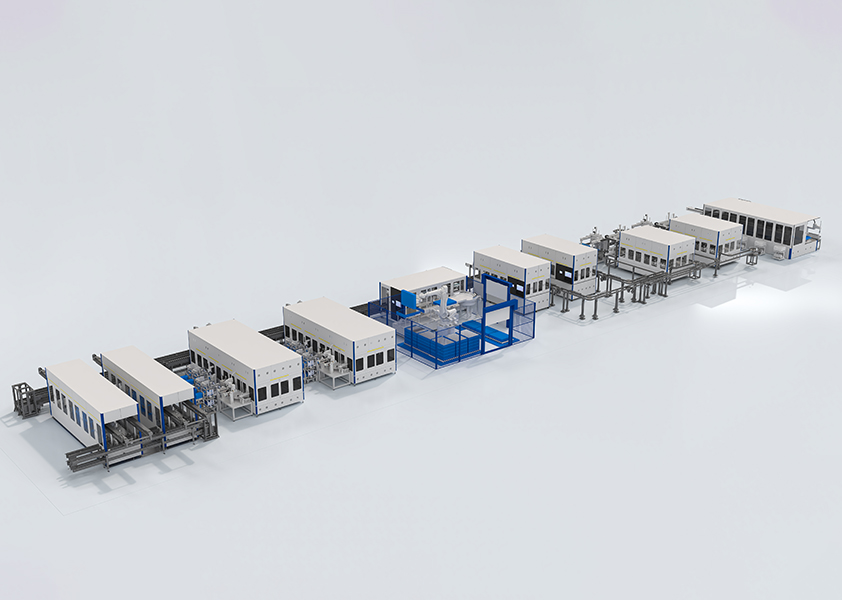
Watch for the vital signs that betray future scrap, lost cycles, and hidden defects. For steady Battery Production, these are the metrics that cut through the fog:• Yield by process step (coating → assembly → formation).• Electrode coating thickness and uniformity.• Cell dimensions and swelling during formation.• Electrolyte fill volume and vacuum/pressure during filling.• Cycle test pass rate and Coulombic efficiency early in formation.• Internal resistance distribution across batches.• Temperature and humidity at critical stations.• Scrap rate per shift and root-cause-tag statistics.I speak from years spent beside technicians and PLC logs; a single overlooked thermal gradient once doubled scrap across a shift at the Nevada Gigafactory, and the lesson stuck: measure where heat gathers.
How to Measure Cleanly
Sensors alone won’t save you. Measure with purpose and guard the signal.• Choose sensors rated for the process environment; accuracy matters more than abundance.• Sample fast enough to catch transient faults but aggregate to avoid false alarms.• Timestamp everything and tie measurements to lot IDs and operator actions.• Use rolling baselines, not fixed ideals—coating machines drift; your alarms must drift with reason.• Implement tiered alerts: soft warnings for early trends, hard alarms for immediate stop.Instrument calibration, routine audits, and simple visual dashboards let engineers interpret data without wading in spreadsheets.
Common Pitfalls and How the Line Heals
Lines fail for predictable reasons. Naming them saves time.• Flood of low-value telemetry — prune and prioritize.• Ignoring context — a pressure drop isn’t a villain until correlated with filling anomalies.• Alarm fatigue — too many trivial alerts train crews to ignore the shrillest bell.• Siloed teams — a sensor flagged by maintenance must be visible to quality and production.Fixes are direct: reduce telemetry to signals that change decisions, insist on cross-functional review of alarms, and run targeted root-cause drills until teams can explain each major alarm in one sentence.
A Compact Watchlist
When time is short, track these first. They reveal most problems early and are actionable:• Process yield by step (minute-level).• Temperature at electrode drying and formation (second-level).• Coating thickness uniformity (scan-level).• Electrolyte fill accuracy (per-cell).• First-pass cycle test pass rate (batch-level).These five give you early warning and immediate corrective paths: adjust dryer profiles, tighten coating tension, recalibrate pumps, or quarantine a suspect cassette.

A Quiet Assurance
Think of monitoring as tending a garden of gears: identify what wilts, water it on a schedule, and keep the pests visible. The problem-driven path narrows your gaze to the signals that force action; it keeps teams honest and production predictable. That steady habit of watching the right measures, learned at benches and floors and in long audits, becomes the quiet assurance you deliver to customers and partners—an assurance now stewarded practically by FHS.