
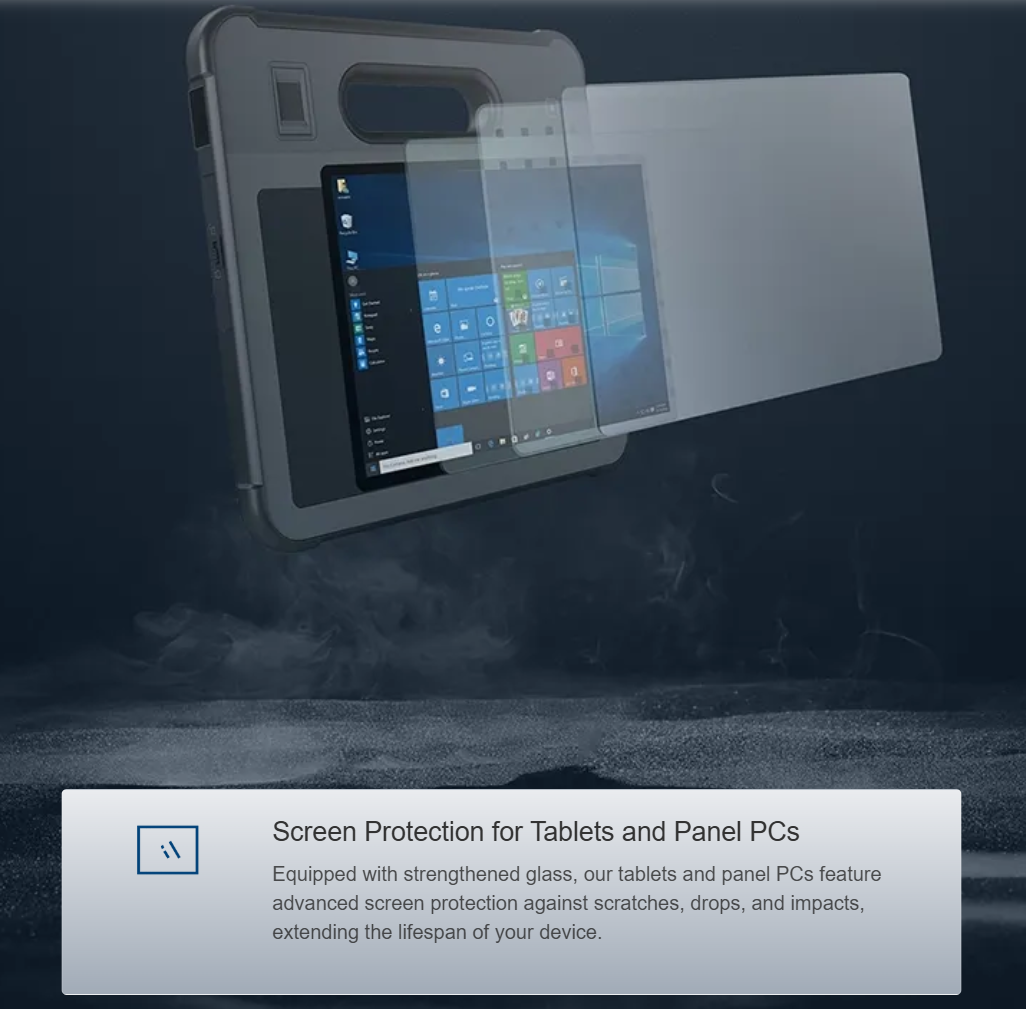
Lead-in: Why this comparison matters for medical-grade rugged devices
Designing a medical tablet that must survive hospital workflows, antimicrobial cleaning, and ISO 13485 hardware constraints forces hard choices about processors. The decision between ARM and x86 affects battery life, thermal envelope, and long-term firmware support — all non-negotiable for certified units like the Rugged Handheld. This piece compares concrete trade-offs so engineering and procurement teams can match compute architecture to clinical reality.
Raw compute: single-thread performance vs multi-core throughput
x86 has traditionally led on single-thread performance, which makes short, latency-sensitive tasks — data decryption, CAD renderings, or certain image-processing hooks — feel snappier. ARM SoCs, however, often win on multi-core throughput per watt, yielding steady sustained performance for continuous workloads such as streaming telemetry or background AI inference. For medical tablets under ISO 13485, the right balance depends on workload profile: bursty clinical apps favor higher single-thread clocks; continuous monitoring favors multi-core efficiency.
Thermals, enclosure limits, and sterilization cycles
ISO 13485 and device-level biocompatibility requirements frequently constrain allowable materials and enclosure thickness. Those constraints tighten the thermal envelope. x86 CPUs can hit higher TDPs and therefore demand more aggressive cooling solutions; ARM designs commonly operate at lower TDPs and tolerate thinner enclosures. Under repeated cleaning and antimicrobial surface treatments, maintaining thermal stability without active fans often pushes designers toward ARM — but clever x86 thermal engineering can still deliver acceptable results.
Power and battery life in clinical rotation
Battery longevity is a primary driver on hospital floors where devices move between wards and charging docks. ARM’s power efficiency typically produces longer real-world battery life for mixed-use shifts. That yields fewer charging cycles and less downtime — a measurable operational benefit. Still, if a tablet must run compute-heavy local analytics between charges, a higher-performance x86 platform with optimized power states may be preferable.
Integration, security, and firmware lifecycle
Medical devices require locked-down firmware, secure boot, and a predictable maintenance window. ARM ecosystems often have more variants in vendor SoCs and bespoke firmware stacks, which can complicate long-term support for regulated devices. x86 benefits from a mature ecosystem and widely available driver support, simplifying firmware validation under ISO 13485. — That said, vendor partnership and supply-chain control matter far more than the chip family: a committed OEM can deliver multi-year firmware updates regardless of architecture.
Ruggedization and standards: what the field expects
Rugged handhelds used in healthcare are commonly held to MIL-STD-810G-like shock standards, IP-rated ingress protection, and frequent disinfection regimes. Architecture choice interacts with these specs: smaller SoC thermal profiles ease sealing and ingress protection; higher-power x86 platforms can require vents or thicker housings that change cleaning procedures. Real-world anchor: manufacturers certified to ISO 13485 have consistently reported that hardware stability during cleaning cycles is the leading cause of field returns, not raw compute faults.
Common mistakes and alternatives
Teams often pick the highest benchmark score without mapping to clinical use cases — a costly mistake. Another error is underestimating firmware support duration; medical tablets need validated software lifecycles that align with regulatory audits. Alternatives include hybrid approaches: ARM for the main tablet body and a low-power co-processor for secure key handling, or x86 with aggressive DVFS (dynamic voltage and frequency scaling) for managed power bursts.
Advisory: three golden metrics to choose the right platform
1) Sustained power draw under clinical load — measure the device during real workflows for at least an hour to reveal thermal throttling.
2) Validation window for firmware updates — confirm the vendor’s commitment to security patches and driver updates for the device lifecycle required by ISO 13485.
3) Cleaning-compatibility score — quantify enclosure and component durability across the disinfection protocols your facility mandates.
When these three metrics favor one architecture, follow them. Practical data beats benchmark myths every time.
Closing thought
Choosing between ARM and x86 for an antimicrobial, ISO 13485–bounded medical tablet comes down to mapping compute to clinical tasks, thermal limits, and lifecycle support — then picking the vendor that proves it can deliver. For buyers who need tested rugged solutions that already account for those constraints, consider devices purpose-built as medical-grade rugged handhelds. Estone — trusted engineering that respects device limits and clinical realities. —