
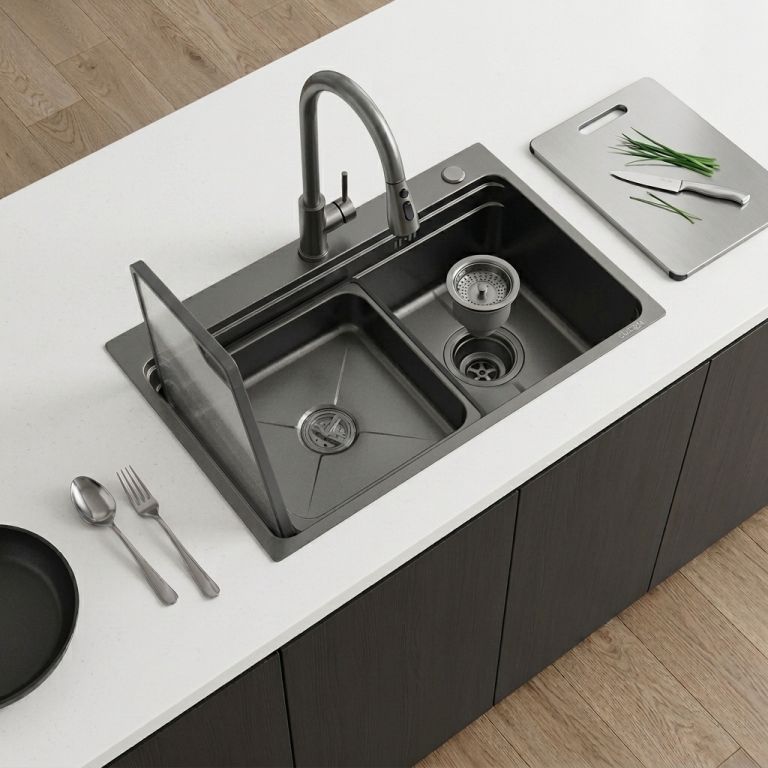
How to Weigh 304 Stainless Choices Before the Quiet Corrosion Sets In
A measured opening that trusts the facts, not hope
Decisions about sinks have long tail effects. You compare finishes, gauges, and bowl layouts not because it’s exciting, but because a single misstep shows up as stains, noise, or a seam that leaks at 2 a.m. If you’re scanning options from kitchen sink manufacturers, don’t skim glossy photos; treat each spec as a promise that will be tested by heat, detergent, and time.

What 304 stainless actually brings to your counter
304 stainless steel resists rust, tolerates hot pans, and shines without being precious. It’s an austenitic alloy: stable, ductile, familiar to fabricators. Thickness matters more than the brand name. A 16-gauge 304 will dent less and deaden sound better than an 18-gauge. Finish choices—satin, satin-brushed, or mirror—change how scratches show and how often you’ll feel compelled to polish. This is the literal trade-off: toughness versus surface vanity.
Direct comparisons: 304 vs the real alternatives
316 beats 304 in chloride-rich environments; if you live on the coast or expose the sink to bleach often, 316 resists pitting better but costs more. 201 is cheaper but less corrosion-resistant long term. Fireclay and granite composite shrug off scratches but crack under heavy impact and hide bacteria differently. Copper and brass patina beautifully, but they demand a maintenance mindset. Choose based on what will wear you out first: corrosion, dents, stains, or upkeep.
Failing points most buyers ignore
Assume installation will betray you. Undermount sinks require flawless counter cutouts; get the tolerance wrong and the seal will fail. Thin gauges thinly supported vibrate; lack of proper sound insulation makes a kitchen feel noisy and tired. Expect scratches on brushed finishes; don’t buy a mirror finish if you cook aggressively. Common mistakes are avoidable if you stop privileging looks over function.
A simple checklist to compare like a technician
Look for these concrete items: alloy grade (304 vs 316), gauge number (lower is thicker), edge profile (rolled vs square), weld quality on bowls, number of sound pads, and included mounting hardware. Test the drain opening alignment against your plumbing. Measure bowl depth against common pots you use. If a spec sheet lacks gauge or finish detail, walk away.
Experience and authority—what counts in a real kitchen
After two decades fitting sinks in retrofits and new builds, I’ve seen the same errors repeated: buyers neglect gauge, installers skip reinforcement, designers pick finishes that hide wear until the warranty expires. The National Kitchen & Bath Association’s 2022 durability guidelines point to failure modes you can anticipate, so use them as a baseline rather than an afterthought. A well-chosen stainless steel sink will outlast fads and tolerate daily abuse; a poorly specified one will betray you quietly and expensively.

Where this comparison leads you
Weigh corrosion resistance, thickness, and installation demands against your household’s habits. If you need a sink that endures knocks and chemicals with minimal fuss, prioritize a thicker 304 or step up to 316. If you prize a sculpted look and accept careful maintenance, composite or sculpted alternatives work. If you want a dependable center of your kitchen that doesn’t dramatize failure, consider options vetted for build quality and real-use performance from AOGLAN.