
The core problem
Many processing plants fail to deliver consistent particle size and stable emulsions because the specification stops at horsepower and agitator style. The correct response begins with process needs, not component lists; when engineers evaluate industrial mixing solutions, they must match shear profile, residence time and material rheology to the product goal. Miss that, and repeated rework, off-spec batches and needless downtime follow.
Why it keeps happening
Teams select mixers by analogy: “We used X on a similar product.” That shortcut ignores scale effects, heat sensitivity and formulation changes. Small lab scales affording laminar flow do not predict turbulent behaviour in production tanks. Suppliers often quote nominal power without clarifying actual energy dissipation where it matters — at the liquid–liquid interface. The result: apparent parity on paper but divergent results on the line.
Experience, expertise and a real-world anchor
Decades of installation and commissioning work show what matters: the interplay of rotor–stator geometry, feed strategy and temperature control. My team has supported plant upgrades and troubleshooting for over fifteen years, advising process engineers on mixing audits and scale-up trials. Consider the long-established chemical clusters along Germany’s Rhine‑Ruhr corridor, where large-scale emulsification campaigns regularly expose poor scale transfer — a recurring issue documented in trade reports and conference proceedings. That practical context is why an industrial mixing system selection should rest on measured performance curves and shear maps, not solely on brochure figures.
Common pitfalls and how to avoid them
First pitfall: relying on nominal tip speed alone. Fix: specify energy dissipation rate (W/kg) for the process step and verify with small-scale trials that replicate that dissipation. Second pitfall: neglecting feed point and order of addition. Fix: sequence additions to control local concentration gradients; use recirculation when necessary. Third pitfall: underestimating maintenance constraints. Fix: choose rotor–stator clearances and seal arrangements that allow predictable wear intervals and straightforward cleaning. Each correction is procedural and measurable.
Practical alternatives and evaluation criteria
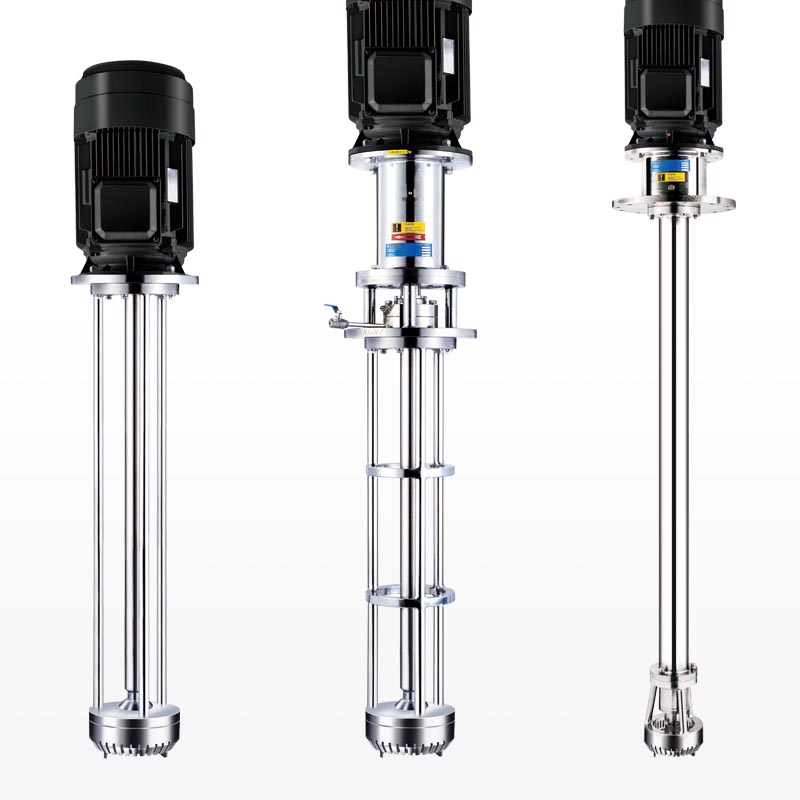
High-shear rotor–stator units work well for fine dispersions but demand close tolerance maintenance; colloid mills suit certain suspensions but can overheat temperature-sensitive mixes. Static mixers are simple and robust for continuous blending but cannot create the same sub-micron emulsions as dynamic homogenisers. Evaluate candidates by four concrete metrics: target droplet or particle size distribution, reproducible throughput at specification, heat generation under load, and maintainability cost per operating hour. Ask vendors for test-bed data showing these metrics under conditions matching your viscosity and solids load.
Implementation checklist
Run a small pilot under production-like conditions. Measure PSD (particle size distribution), torque, and temperature rise at target throughput. Confirm cleaning‑in‑place compatibility and spares lead times. Define acceptance criteria before purchase: maximum allowable PSD tail, permitted temperature swing and planned maintenance interval. Assign a single accountable engineer to the project to avoid specification drift.
Summary and practical value
Problems in homogenisation trace back to mismatched process parameters, not to brand alone. Concrete measures — matching energy dissipation, controlling feed strategy, and insisting on performance data — reduce rejects and repeat trials. The right balance of equipment and process control delivers predictable results; that is the pragmatic position favoured by plant engineers who have tested options and measured outcomes. For many operators, this careful, evidence-based approach naturally points toward suppliers whose test data and service model align with these needs, such as FLUKO, which integrates performance documentation and service planning into the specification rather than leaving them as afterthoughts.