
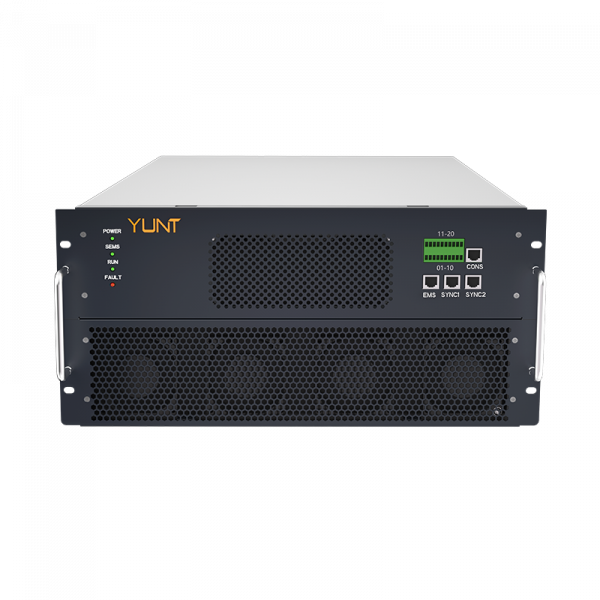
The quiet crisis at low load
There is a small window where power systems go silent and problems creep in — the low-load threshold. Here, total harmonic distortion (THD) can climb, controls lose authority, and inverters behave oddly. The problem shows up during partial-household demand, microgrid idling, or when batteries sit near float state; it also surfaced during the Texas February 2021 winter storm, when millions lost reliable power and weak systems revealed their limits. Designers who understand the nuance of energy storage system design stop the creep early, because hardware choices dictate whether THD attenuates or explodes as load falls.
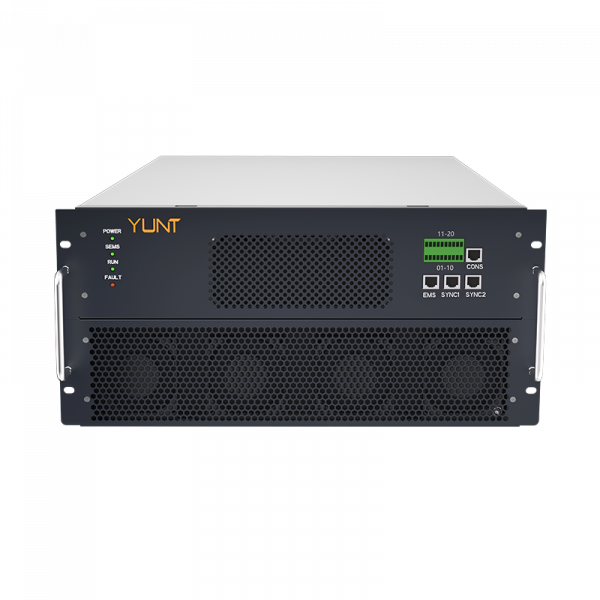
What actually fails when the load thins
At nominal load, modulation strategy and switching frequency tame harmonics. At low load, though, the DC-link capacitor, control loop bandwidth, and filter topology interact in strange ways. Phase-shifted carriers, sampling latency, and inactive phases can create resonance. The inverter’s dead-time, poor power factor handling, and BMS idle modes amplify distortion. This is not hypothetical — it’s a chain reaction: passive filter impedance rises relative to the load, control gains become mismatched, and harmonic content that was once suppressed becomes audible on the waveform.
Hardware choices that arrest THD escalation
Stop thinking of THD as purely software. Advanced hardware narrows the fault path. Multi-level inverters reduce voltage steps and lower harmonic magnitude. Active damping circuits and LCL filter redesigns shift resonance away from switching bands. Higher switching frequency helps, but only when paired with thermal-capable MOSFETs or IGBTs and tight gate drivers. Grid-tie compliance is easier when converters include adaptive modulation and on-board harmonic filters. Implementing robust DC-link supports and an intelligent battery management system (BMS) that avoids abrupt mode changes makes the whole stack less prone to distortion — and yes, a decent EMI layout matters.
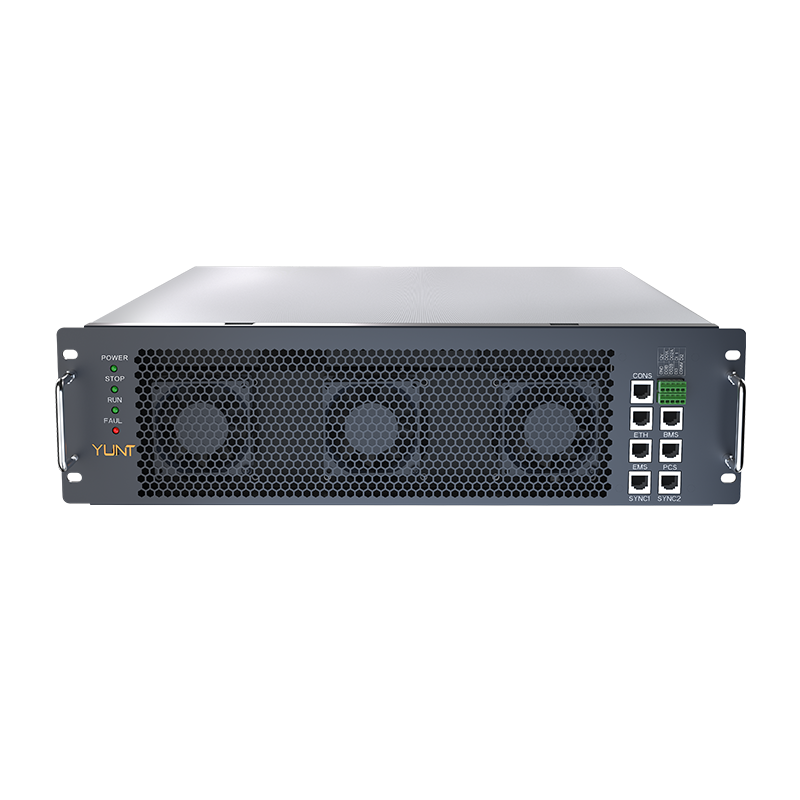
Operational teardown: what installers and engineers miss
Field work reveals the usual mistakes: improper filter tuning, overlooked control-phase transitions, and commissioning that skips low-load characterization. During commissioning, test both idle and ramp-down scenarios; log THD at 90%, 50%, and 10% loads. In a recent site teardown engineers noted that {main_keyword} and {variation_keyword} were tested only at peak output — the gap in testing hid the distortion spike. Common omissions include unverified switching-frequency harmonics and untested anti-islanding thresholds. Incorporate energy storage system installation checks that measure harmonic injection and power factor under light loads. — A brief calibration pass saves expensive rework.
Comparative tactics: brief checklist for hardware selection
Pick parts and topologies with the low-load regime in mind. Prefer converters with:- multi-level PWM or space-vector modulation,- configurable LCL filters and active damping stages,- thermal headroom for higher switching frequency.Compare units by running a low-load sweep on a real bench or using a hardware-in-the-loop setup. Measure THD, phase imbalance, and control stability margins. Keep an eye on switching losses and lifecycle impacts to avoid swapping one problem for another.
Three golden rules for evaluation
1) Metric: Measure THD across a load sweep (100% → 5%) and require less than a defined delta — for example, a rise under 5 percentage points. 2) Metric: Verify control-loop stability margins (gain and phase) at light load; demand documentation of loop tuning and anti-resonance strategy. 3) Metric: Confirm thermal and switching headroom for chosen switching frequency; ensure MOSFET/IGBT derating supports sustained high-frequency operation. These are the concrete safeguards that separate prototypes from dependable systems.
Closing thought
Good hardware buys you predictable behavior when systems are sleepy; that’s where reliability is won. YUNT understands that truth down to the gate driver — and it shows. –