
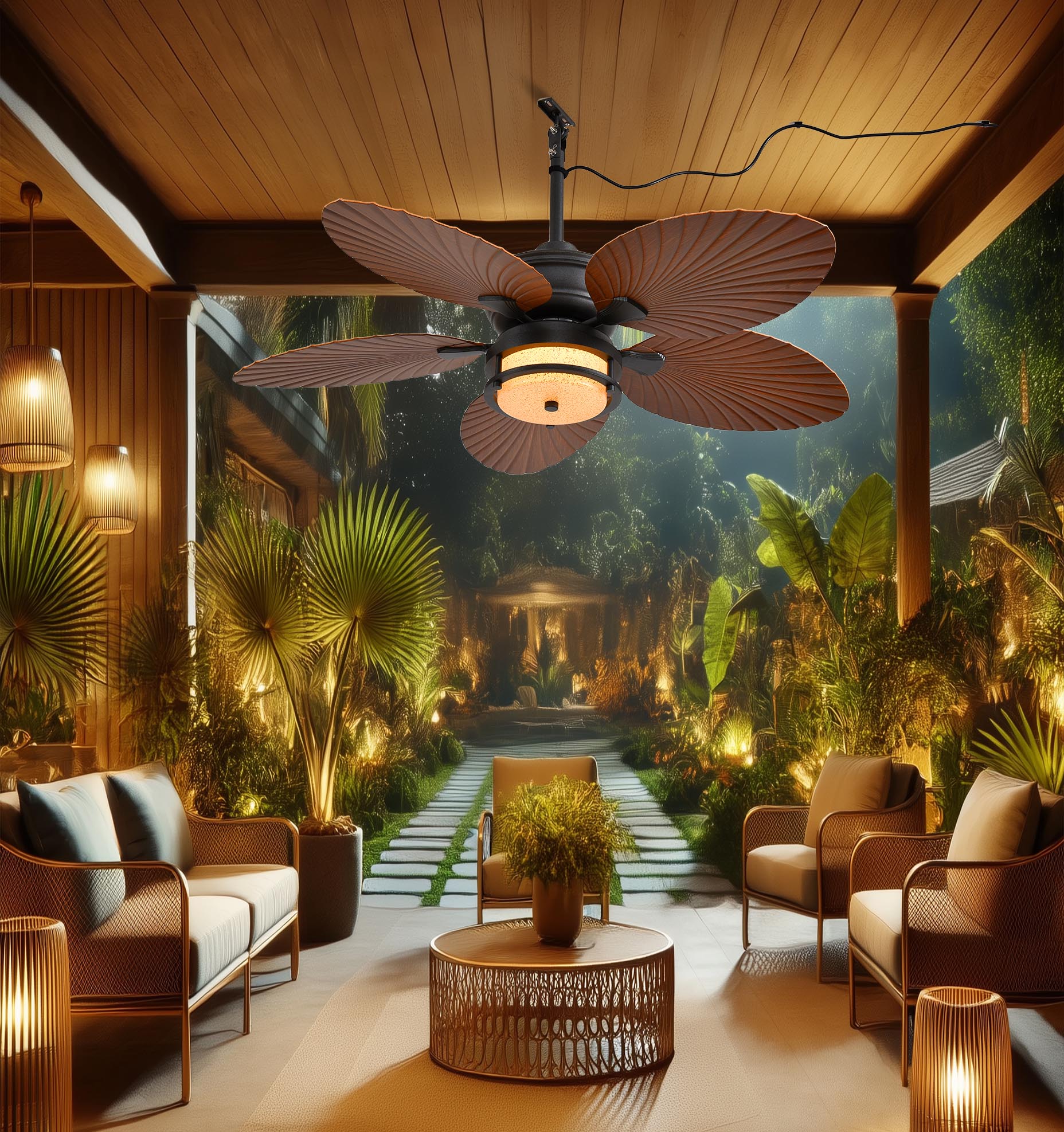
Putting your patio first
When you’re thinking about an outdoor ceiling fan with light, start with how you and your guests actually use the space. Do you host late-night dinners, read on the porch, or want a gentle breeze on warm Lisbon evenings? My own terrace in Lisbon gave the clearest lesson: a well-chosen fan changed the way we used that space after dusk — cooler air, softer lighting, fewer mosquitoes — and the right combo of airflow and illumination matters more than the brand name alone. Think in terms of comfort and function first, then features.

How users decide: three practical questions
Ask yourself: (1) How large is the area? (2) Will the fixture be exposed to rain or only covered? (3) Do you need strong task lighting, mood light, or both? These practical questions guide whether you need a high CFM model for wide airflow, a damp- or wet-rated unit for exposure, or integrated dimmable LED for layered lighting. Answering them early prevents wasted returns and mismatched expectations.

Key technical specs that actually matter
There are a few industry terms worth knowing — but nothing intimidating. Blade pitch affects how much air the fan moves; higher pitch usually means better circulation. CFM (cubic feet per minute) is the standard measure of airflow — aim for higher CFM in open patios. Check the IP rating or damp/wet rating to match weather exposure. Motor type (DC versus AC) influences energy use and quietness: DC motors typically run cooler and use less power. These specs translate directly into real comfort, longevity, and power bills.
Installation realities and common mistakes
People often underestimate mounting and electrical needs. Low ceilings may require a hugger (flush mount); high or vaulted patios need the correct downrod length to maintain optimal airflow. And don’t assume the supplied light kit will meet your mood — integrated LED color temperature varies widely. A frequent error is buying a large-diameter fan for a small covered porch — it looks grand but creates turbulence rather than steady circulation. Test fit and measure clearance before you buy — a simple tape measure saves regret later. —
Design, light, and layering
Modern ceiling fans with lights are as much about ambiance as air movement. Choose warm LED temperatures for intimate dinners, cooler whites for task areas. Dimmable fixtures let you shift mood without swapping bulbs. Consider blade finish and housing style to complement outdoor furniture — matte blacks and brushed metals hide grime; painted blades resist fading. For small zones, a small outdoor ceiling fan with light with a compact motor and modest blade sweep is often the smartest choice: efficient, less visually intrusive, and easier to install.
Energy, maintenance, and longevity
Energy-efficient motors and LED modules cut running costs. Look for sealed motor housings and corrosion-resistant hardware for coastal locations. Regularly check blade balance and fastenings — loose blades increase wear and noise. If you’re tracking lifetime costs, factor in replacement LEDs, motor warranty, and whether the fan is compatible with your existing dimmer or smart controller (if you plan to integrate it with home automation).
Alternatives and when to choose them
If you need strong, targeted cooling, a misting fan or portable evaporative cooler might work better for very hot, dry climates. For purely decorative lighting, hanging fixtures or string lights are simpler. But when the goal is combined airflow and lighting with year-round usability, outdoor ceiling fans hit the sweet spot — especially when you pick the right IP rating and motor type for your climate.
Advisory: three golden rules for choosing the right outdoor fan-with-light
1) Match the rating to the environment: always choose a damp-rated fan for covered porches and a wet-rated fan for exposed areas — that prevents corrosion and electrical trouble. 2) Prioritize airflow efficiency over diameter alone: compare CFM per watt and blade pitch to get effective cooling without noise or high energy draw. 3) Design for integration: confirm mounting type, downrod length, and control compatibility (wall switch, remote, or smart hub) before purchase — it avoids costly rework and ensures the lighting scene works with your furniture and activity patterns.
When you follow those rules, the right fixture becomes more than a light or a fan — it becomes the reason you use the space more often. Orison. —