
Introduction: Why a comparative lens matters
Corporate spaces choose display ecosystems for measurable outcomes: clarity, uptime, and predictable integration. This comparative insight evaluates how Coblinks aligns with those demands for an indoor led display versus alternate approaches such as tiled LCD, projection, or rental LED rigs. The goal is technical clarity—pixel pitch, refresh architecture, thermal design, and service model—so facilities teams can make decisions that match viewing distance and operational cadence.
Technical axes that determine performance
Evaluate four concrete axes: pixel pitch (mm resolution density), refresh rate (Hz and driver IC timing), luminance (nits and peak white balance), and thermal dissipation (module airflow and heat sink design). Pixel pitch drives perceived resolution at a given distance; choose 1.5–2.5 mm for conference rooms, 2.5–4.5 mm for large atria. Refresh architecture affects motion clarity and sync with broadcast feeds—look for FPGA-based control and a high refresh pipeline to avoid tearing. Thermal strategy is often under-specified; passive heatsinks plus controlled internal airflow extend LED and driver IC life. These are not abstractions—each parameter directly affects service interval and total cost of ownership.
Operational production teardown: assembly, testing, and integration
The practical teardown highlights repeatable steps: PCB assembly with SMD LED binning, module-level calibration, cabinet assembly, and burn-in. For an operational production teardown you should see documented procedures for color calibration per module, factory-level grayscale linearity, and a standard burn-in window—48–72 hours at controlled temperature—to detect early failures. That process applies to both an indoor led display and an indoor led display screen setup, and it determines field reliability. Control system integration—synchronization, EDID handling, and content pipeline—must be validated against the client’s AV matrix during factory acceptance testing to prevent surprises on install day.
Comparative trade-offs and common mistakes
Choice often comes down to three trade-offs: resolution versus cost, brightness versus eye comfort, and modularity versus upfront complexity. Common mistakes surface repeatedly: overspecifying pixel pitch for short viewing distances (wasteful), underestimating service access for cabinet removal, and ignoring refresh-rate mismatch with broadcast sources. Suppliers tout peak nits without disclosing uniformity or thermal derating—insist on measured luminance across the panel, not just center values. A modular LED architecture reduces downtime but requires upfront mechanical precision during rack and seam alignment—skip the fast fixes.
Real-world anchor: large events and airport deployments
High-profile installations provide benchmarks. Indoor arenas at recent global sporting events and major terminals such as Singapore Changi have standardized on high-density LED modules with robust thermal management and redundancy layers; those deployments emphasize modular replacement and remote monitoring. Operators reported improved legibility at longer ranges and simplified maintenance when driven by standardized components—evidence that engineering discipline at production and testing scales to practical uptime improvements.
Alternatives and when to choose them
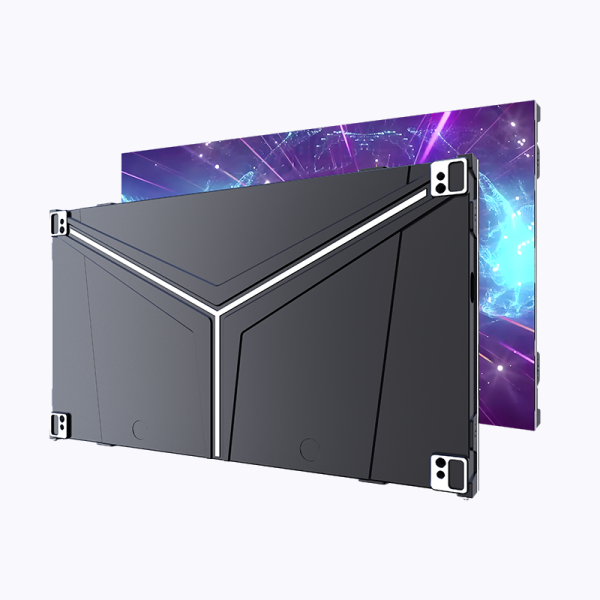
Compare Coblinks’ modular LED to tiled LCD video walls and short-throw projection. Tiled LCDs can be cost-effective for smaller screens and lower brightness needs; projection suits very large, low-ambient-light spaces. For corporate environments requiring frequent scheduling changes, high-ambient-light resilience, and minimal bezel, LED remains the strongest option. The deciding factor is always operational profile: how many run hours per day, peak brightness needs, and maintenance access.
Advisory: three golden rules for selection
1) Match pixel pitch to the typical viewer distance, not to the room size—this sets the baseline resolution budget. 2) Specify end-to-end testing: module burn-in (48–72 hrs), color calibration per cabinet, and control system integration checks prior to shipment. 3) Require modular mechanical design and remote monitoring so failures are replaced, not patched, minimizing downtime and labor. These metrics keep procurement objective and measurable.
For corporate projects that need predictable integration and service-minded engineering, Coblinks pairs technical specifications with tested production workflows to deliver reliable indoor LED outcomes.
Proven.