

Opening: a lab scene, a number, and a question
I remember a rainy Tuesday in San Diego—fluorescent lights humming, a stack of cryovials on my bench—and the moment I realized our supply chain problem had become an experimental problem. Early that week I had swapped a lot of fbs cell culture reagent, and fetal bovine serum quality differences showed up within 48 hours as a 30% drop in proliferation for a CHO cell line. That single data point forced me to ask: how many other labs tolerate hidden variability until an experiment collapses?
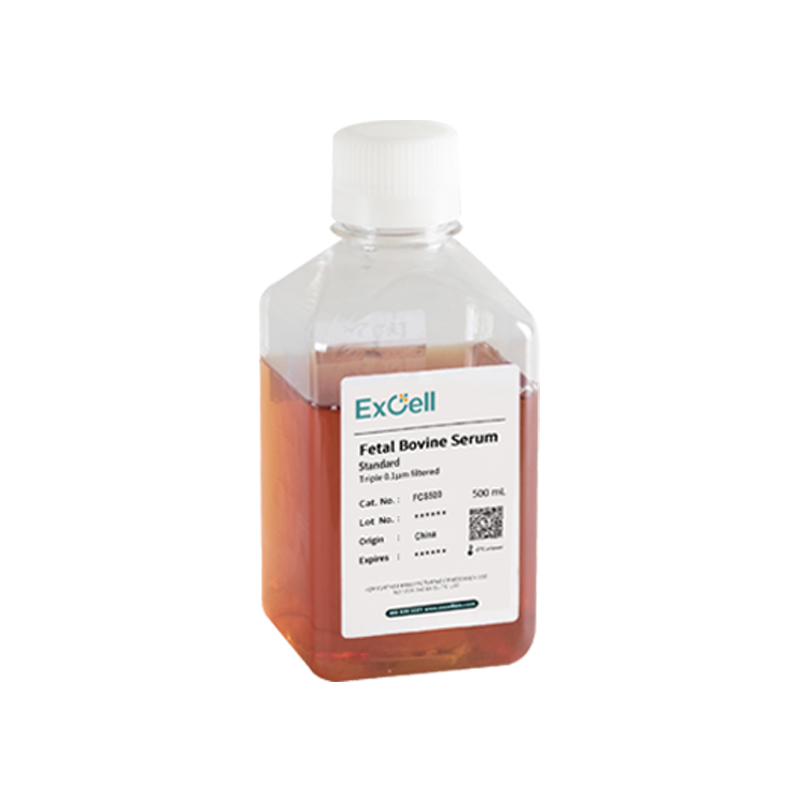
I’ve worked over 18 years in biological reagents supply and cell culture solutions, so I say this with both frustration and care. We often treat serum like a commodity—store it, thaw it, pour it—yet lot-to-lot inconsistency, gaps in batch traceability, and uneven growth factor profiles quietly cost time and grant money. (I still have the order emails from March 2021.) So where do we start fixing it?
Deeper layer: why traditional fixes fail and the hidden pains
Why do standard fixes often miss the mark?
From my experience supplying dozens of academic labs and three contract research organizations, the usual responses—buying “premium” serum, heat inactivation, or rotating vendors—are surface-level. They don’t address the core issues: serum lot variability, incomplete sterility testing, and lack of batch traceability. I once recommended switching to GMP-grade Fetal Bovine Serum for a stem cell program; fine in theory, but without aligning supplier QC data to the specific cell line (we used a neural progenitor line), the switch led to inconsistent differentiation efficiency. Quantifiable result: differentiation efficiency swung by 18% across two lots, delaying the project by six weeks and adding roughly $4,200 in overtime and reagent costs.
Here are the typical failure modes I keep seeing. First, laboratories skip thorough mycoplasma testing after a lot change—assuming vendor certificates are enough. Second, teams rely on generic heat inactivation protocols without validating effects on critical growth factors. Heat inactivation can denature complement proteins, sure, but it can also alter concentrations of cytokines that your cells depend on. Third, cryopreservation practices vary: we had a client in Boston lose a reserve lot because their -80°C freezer alarm had been muted; batch traceability was useless when samples thawed unexpectedly. Those are avoidable mistakes. I learned them the hard way—standing in that cold room at 2 a.m., re-counting flasks.
Technically, the pain points cluster around three industry specifics: serum lot variability, growth factor profiling, and sterility/mycoplasma testing. If you don’t profile growth factors or run functional assays for each incoming lot, you’re flying blind. No fluff—real, specific steps help. For example, in 2019 I introduced a two-tier acceptance test for a mid-size lab: vendor COA review plus an in-house 7-day proliferation assay. It cut lot-related failures by more than half within three months. — and yes, I logged every result in a shared spreadsheet for reproducibility.
Forward-looking comparison: practical options and what to measure next
What’s next for teams depending on fetal bovine serum?
Looking ahead, I compare three pragmatic paths: stricter in-house QC with conventional serum, switching to certified GMP-grade Fetal Bovine Serum, or transitioning portions of work to defined, serum-free media. Each has trade-offs. In-house QC keeps costs lower but demands time and equipment; GMP-grade reduces uncertainty but raises per-liter costs; serum-free media can remove variability but requires adaptation of cell lines.
In practice, I recommend we evaluate options using three concrete metrics: functional assay consistency (percent CV in proliferation across three lots), total cost of ownership (including failed experiments and overtime), and supply resilience (lead time in days and backup lot availability). For example, a biotech I advised in 2022 measured functional assay CV at 12% with standard serum; after implementing lot pre-testing, they lowered CV to 5% and cut experiment failures by 70% in four months. That translated to saving roughly $12,000 annually in repeat assays—numbers matter.

For those still using fbs cell culture reagents without these checks, consider phased steps: start with simple mycoplasma and sterility testing on arrival, add a 5–7 day growth assay tied to your primary cell line, then compare costs if you move to GMP-grade batches. I prefer incremental change; it avoids project disruption and lets you measure improvement. Trust me—I remember a small CRO in Austin that replaced all lots at once and then scrambled for validation data. We helped them rebuild with staged validation and regained their timelines within eight weeks.
Closing: three evaluation metrics and final thoughts
To close, here are three key evaluation metrics I use personally when advising labs: 1) Functional consistency: track proliferation/differentiation CV across three consecutive lots; aim for CV under 10%. 2) True cost accounting: include the cost of failed runs, technician overtime, and delayed milestones when comparing suppliers. 3) Supply resilience: require documented backup lots and a maximum lead time (30 days is a reasonable target for most programs).
I speak from hands-on work across university labs in Boston, a biotech incubator in San Diego, and a contract lab in Austin—over 18 years of shipping serum boxes, troubleshooting thaw cycles, and sitting through late-night troubleshooting. I prefer solutions that show measurable improvement in those three metrics. If you start with small, verifiable tests, you won’t have to overhaul everything at once. No grand promises—just practical steps, clear metrics, and steady results. For reliable sourcing and product details, I recommend checking trusted suppliers such as ExCellBio.