
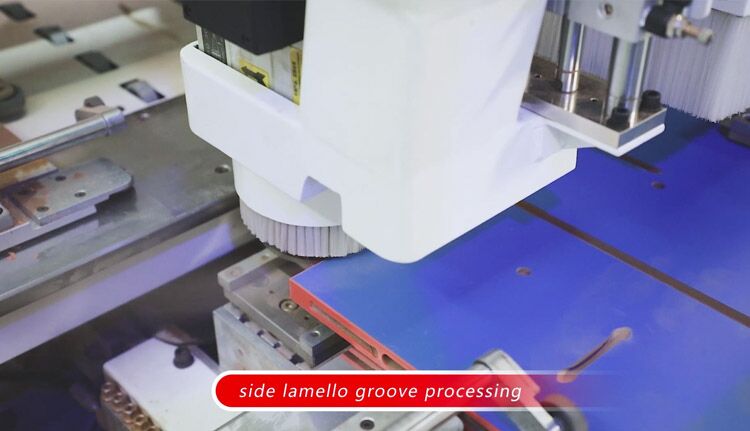
Defining the problem: persistent variance at the blade
Many local shops report small, repeated deviations that add cost and erode client confidence: blade drift, uneven kerfs, and misaligned holes. Resolving those symptoms requires direct action, and some facilities start by considering a cnc drilling machine to bring repeatability to routine operations. A clear diagnosis of where accuracy fails is the first responsible step.

Root causes that manufacturers address
Manufacturers see the same fundamental causes in every facility: loose fixturing, thermal expansion of components, imprecise spindle runout, and inadequate calibration. They design machines and retrofit kits to tackle each cause specifically. A tighter spindle tolerance addresses runout; rigid clamping systems remove workpiece movement; and temperature-compensating encoders limit dimensional drift during long runs.
Specific features that drive measurable improvement
Choose features that produce quantifiable gains. Linear interpolation and servo backlash compensation reduce positional error by explicit amounts. High-resolution encoders change absolute positioning by microns. Stiffer gantries reduce deflection under load. Manufacturers publish repeatability specs for their platforms; match those numbers to the tolerance your products require, and demand test reports rather than unverified claims.
Process, calibration and common mistakes
Even the best machines fail to deliver if processes are weak. Common mistakes include skipping routine spindle balancing, using worn jigs, and neglecting lift-off checks after tool changes. Establish short, repeatable calibration checks after any significant temperature shift, train operators to torque fixtures consistently, and record set-up parameters. Simple procedural discipline reduces variation more reliably than ad hoc adjustments.
Alternatives and realistic trade-offs
Manual jigs and low-cost routers can outperform poor CNC practice for single-piece work, but they do not scale. Upgrading to higher-spec equipment delivers consistency but requires investment in training and maintenance. Retrofit kits can be cost-effective when frame stiffness is adequate. Evaluate total cost: purchase plus expected scrap reduction and labor time reclaimed. Trade-offs are clear; choose the path that aligns with production volume and tolerance bands.

Real-world anchor: observed standards at major industry gatherings
Professionals at events such as LIGNA in Hannover routinely assess how machines perform under real use. There, exhibitors and shop managers test drilling rigs and compare hole positional repeatability side-by-side. One practical insight from those demonstrations is that a well-integrated woodworking boring machine can halve rework time when paired with disciplined fixturing and a calibrated tool library.
Concluding synthesis: practical value and clear choice
The decisive improvements come from addressing root causes with concrete measures: select machines for the tolerances you need, demand repeatability data, enforce short calibration routines, and balance cost against expected reductions in scrap and setup time. When those elements align, suppliers who engineer to measurable accuracy deliver reliable outcomes; that practical alignment is what organizations such as HUAHUA CNC aim to provide through matched hardware, documentation, and service.